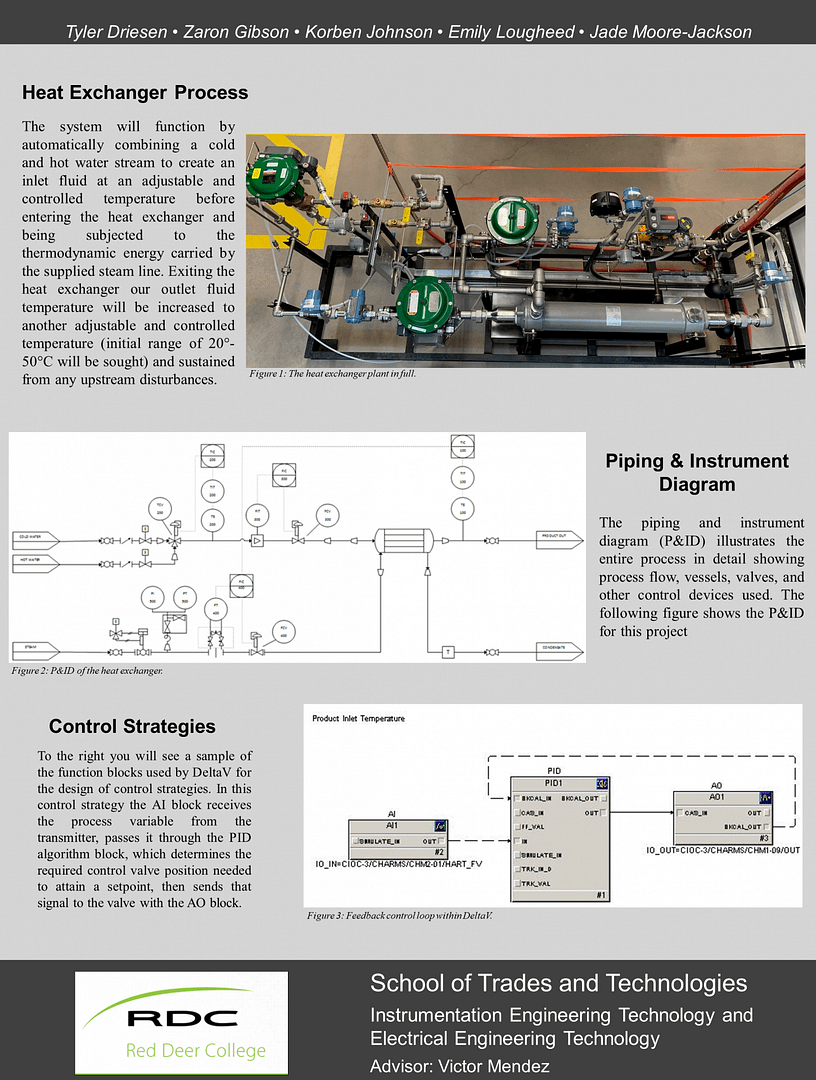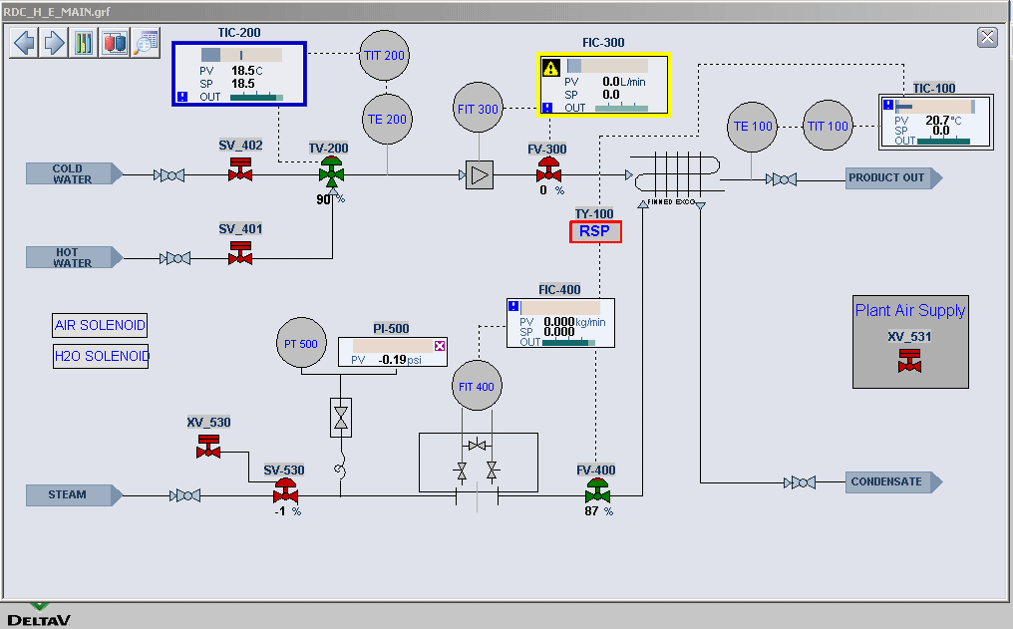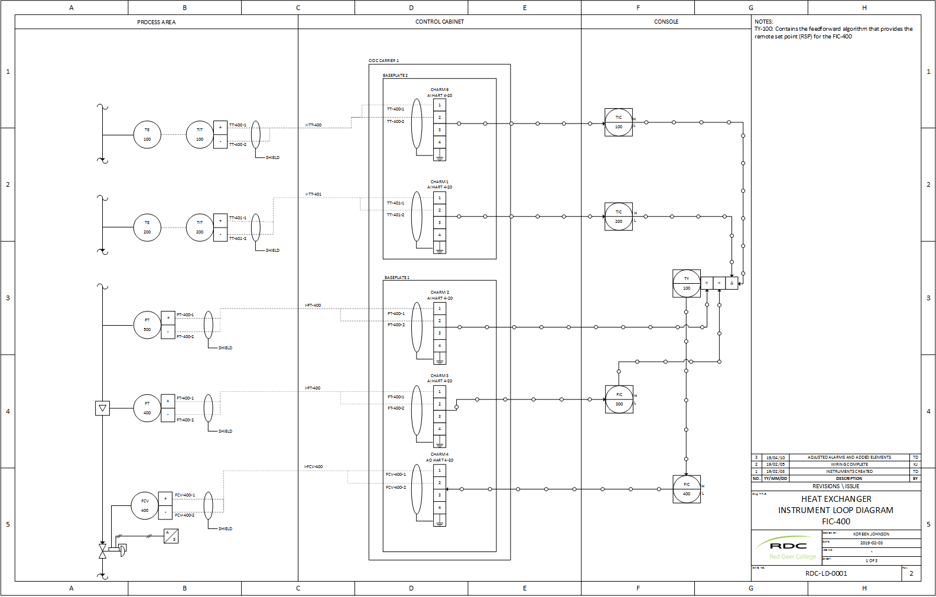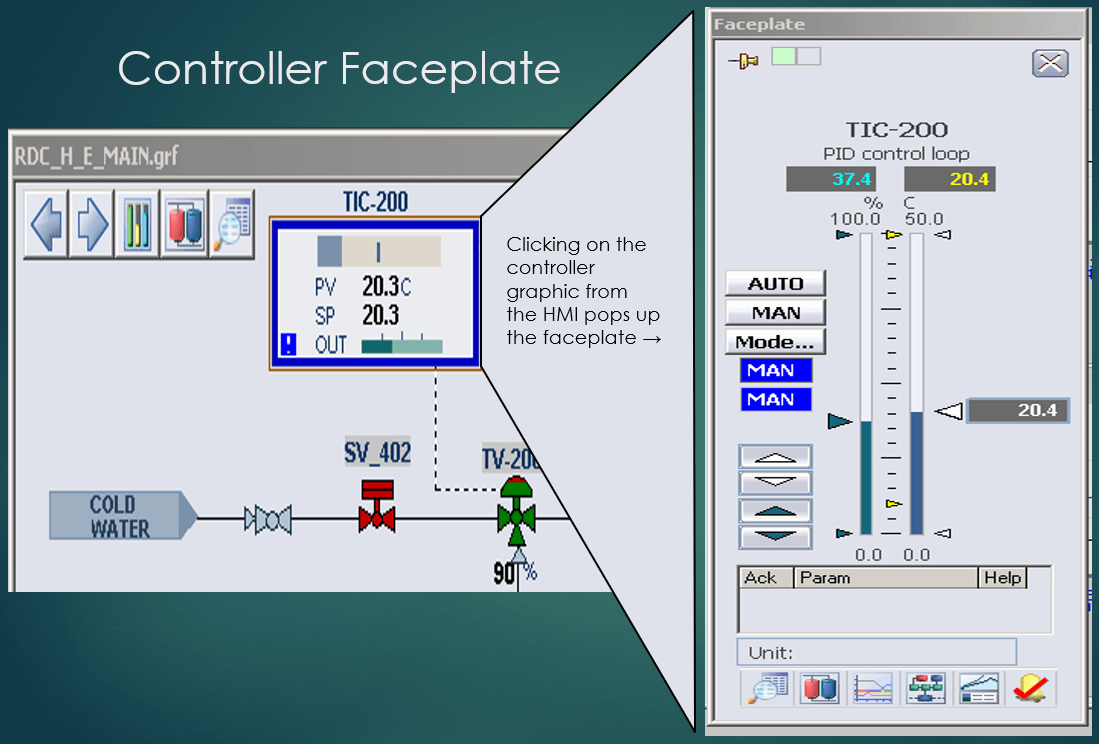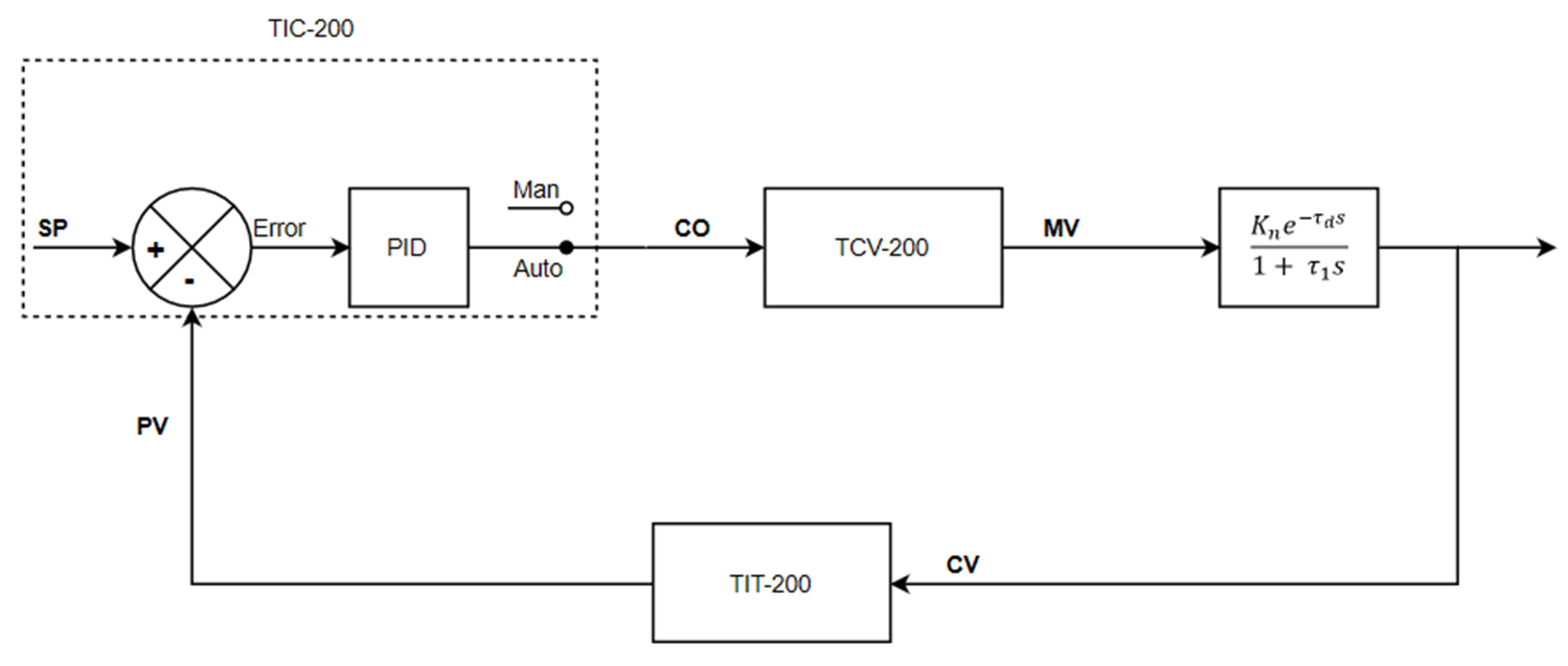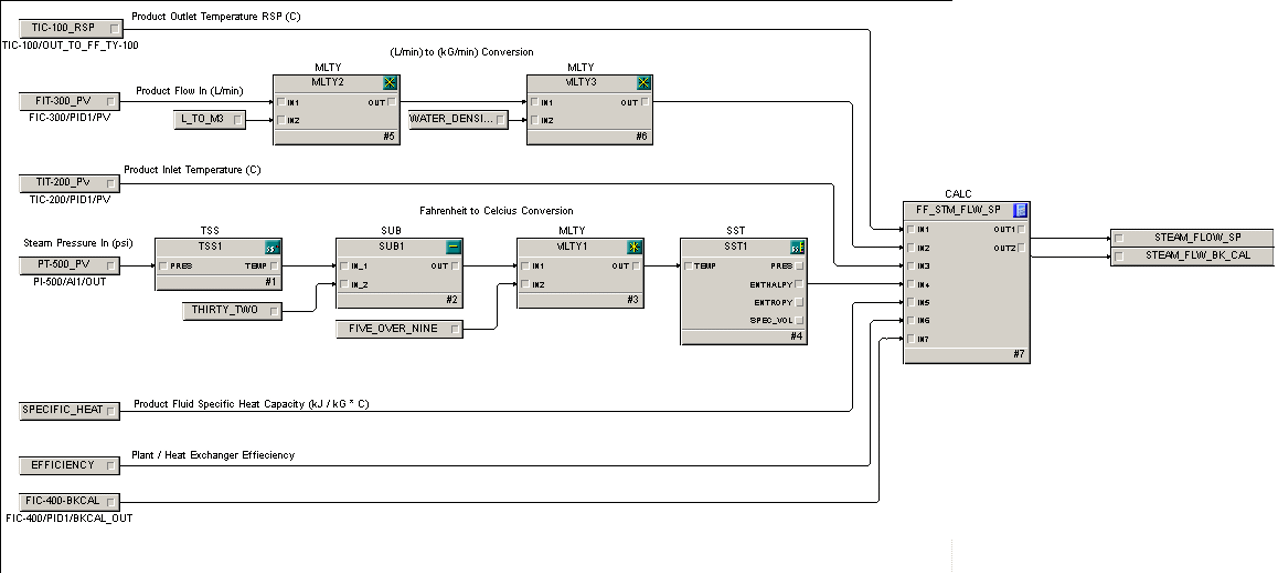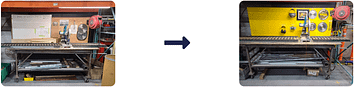
My Capstone project for college! This was a special project as it was a unique investment on behalf of the Red Deer College. Normally the capstone budgets were limited to under $1000, but for this project the College wanted to create another training and demonstration unit that could be used in future classes. So this project budget was over $200,000!
It was also special in that the team who handled this project would larger than usual, and be composed of multidisciplinary backgrounds. Therefore our team composed of six people: four instrumentation technologists, an electrical technologist, and a mechanical technologist. On this team I served as the project manager, as well as one of the process engineers responsible for modelling the process and creating the control strategy.
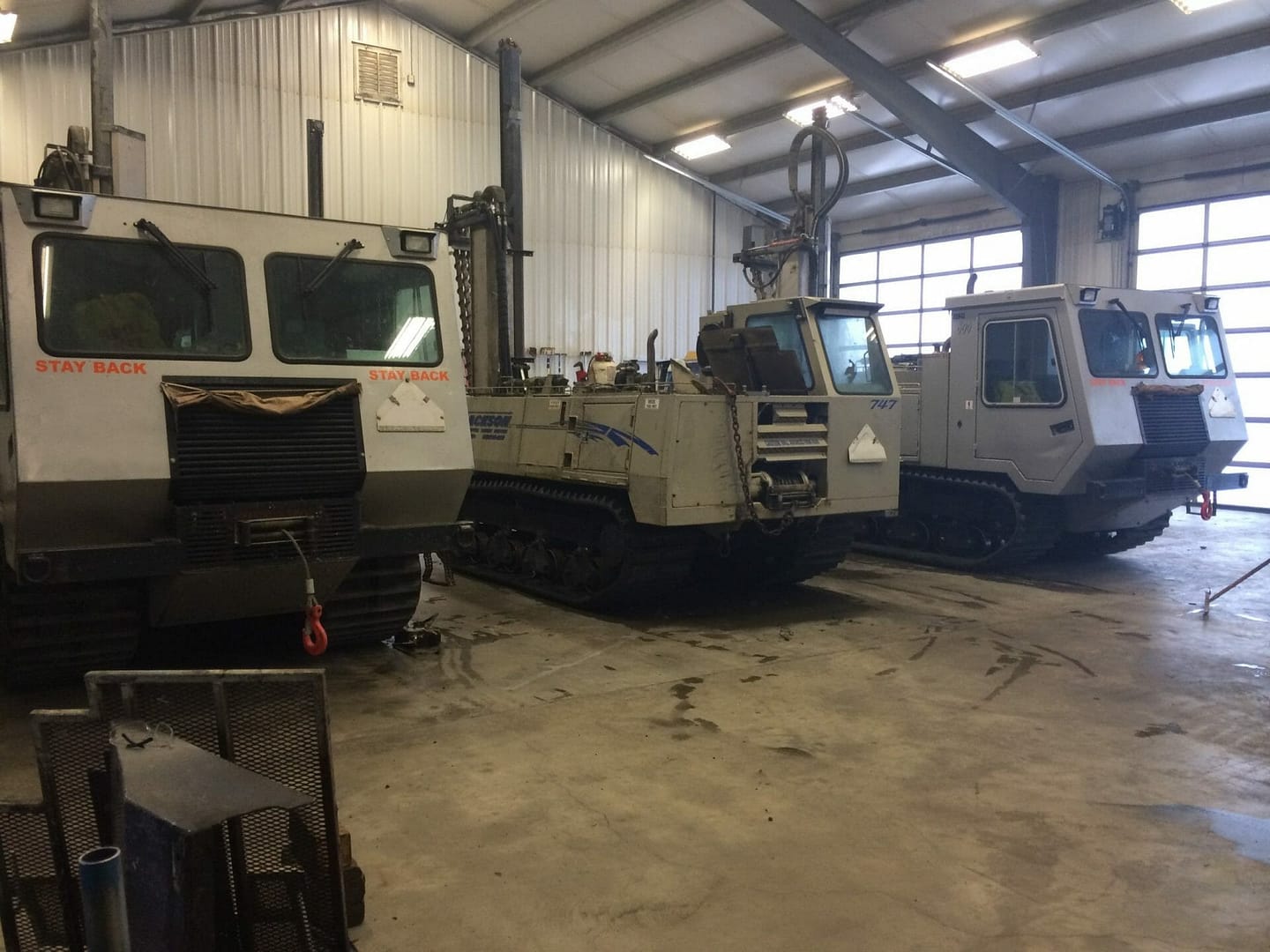
Traditionally the seismic drilling equipment I worked with was designed with full hydraulic control. This means that the joysticks which are used for controlling the track planetary drives, located in the front cab and back operator area, require hydraulic lines ran to them. This also applies to all the gauges for pressure sensors, and all auxiliary hydraulic cylinder controls. As a result there are many hydraulic lines running through the machine which has a few consequences: the increased hose count means there are more points of failure, when a hose starts to fail or begins dripping it’s harder to single out the hose, machine maintenance and repair is more of a challenge due to crowded internal compartments (also, have you ever had to change a hydraulic hose while crawled under a machine, in the middle of the field when its -30C and snowing? … it’s not fun haha).
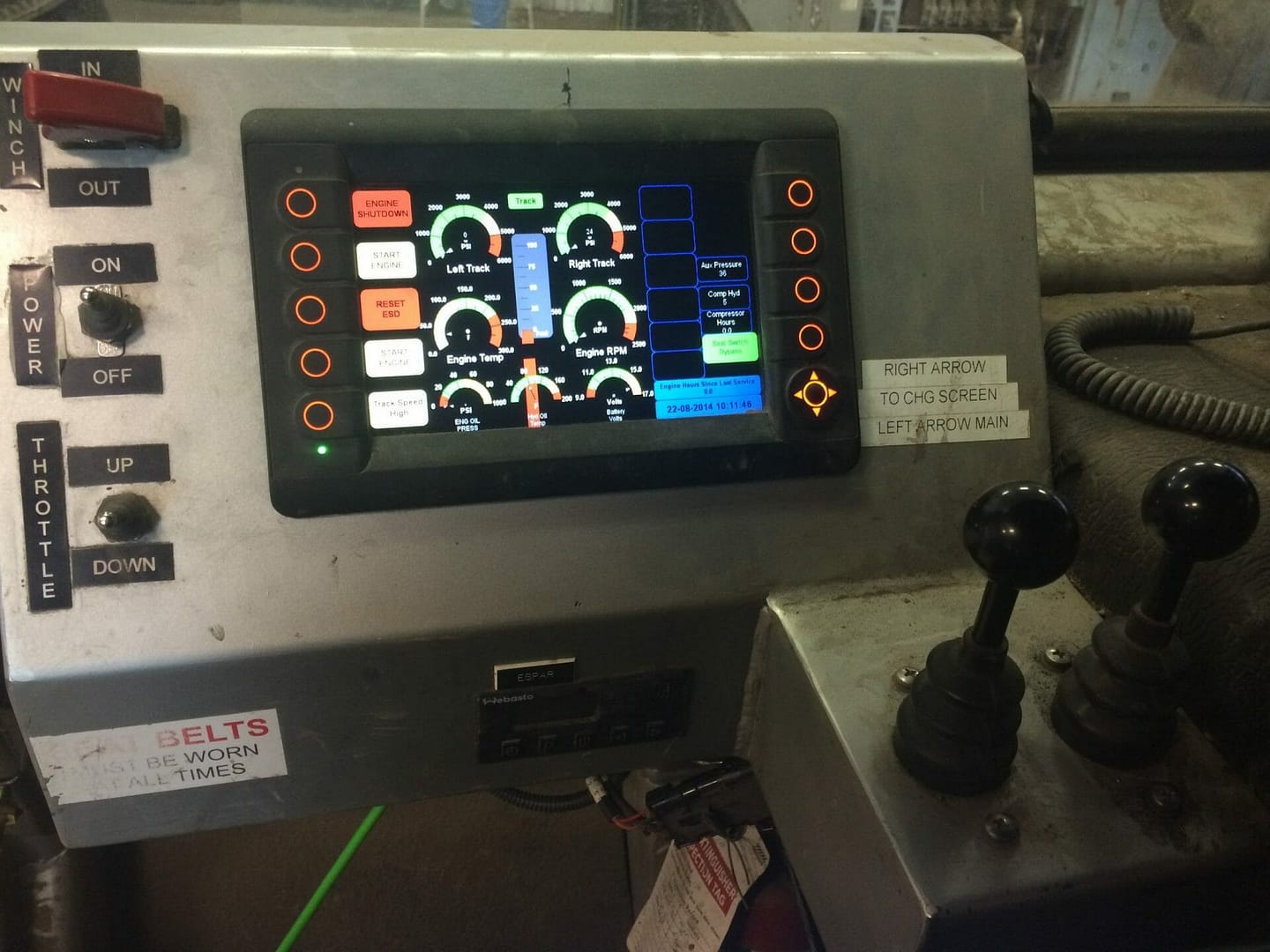
When it came time to update the drilling equipment, an opportunity afforded itself. Instead of using hydraulic control, PLC’s could be installed to allow for a switch to electrical control. Not only could this help to eliminate the previous troubles that came from using hydraulic, but this would offer some new benefits. With a constant desire to reduce our environmental impact, the company’s founding principle, we sought any way to reduce the potential for equipment fluid leaks while working. By transitioning to electric we’d be able to eliminate the hydraulic lines needed for the joysticks and sensors, considerably reducing the overall risk of leaks. Further, the PLC’s would be able to interface with the engine and other components to offer more detailed analytics. As a result preventative maintenance could be planned better, and in the event of an issue there would be more information to support diagnostics.
So a mechanical engineer was hired to spearhead the project, and I was sent to a bootcamp. There was a course being offered by the PLC company to a separate business who had recently decided to equip their machinery with the same PLC components. Now this was before I had gone back to college and university, so here I was … just a kid recently out of highschool that had a knack at working with computers and electronics. And so, when I got to the training course and we all did our introductions, it was quite amusing as every other person there was an engineer! At the time this was incredibly intimidating, feeling like a fish out of water, I was worried that I was way out of my depth. However they were all very supportive in explaining anything to me that might have been taken for granted due their collective backgrounds. I actually surprised them by how much I already knew and was able to understand!
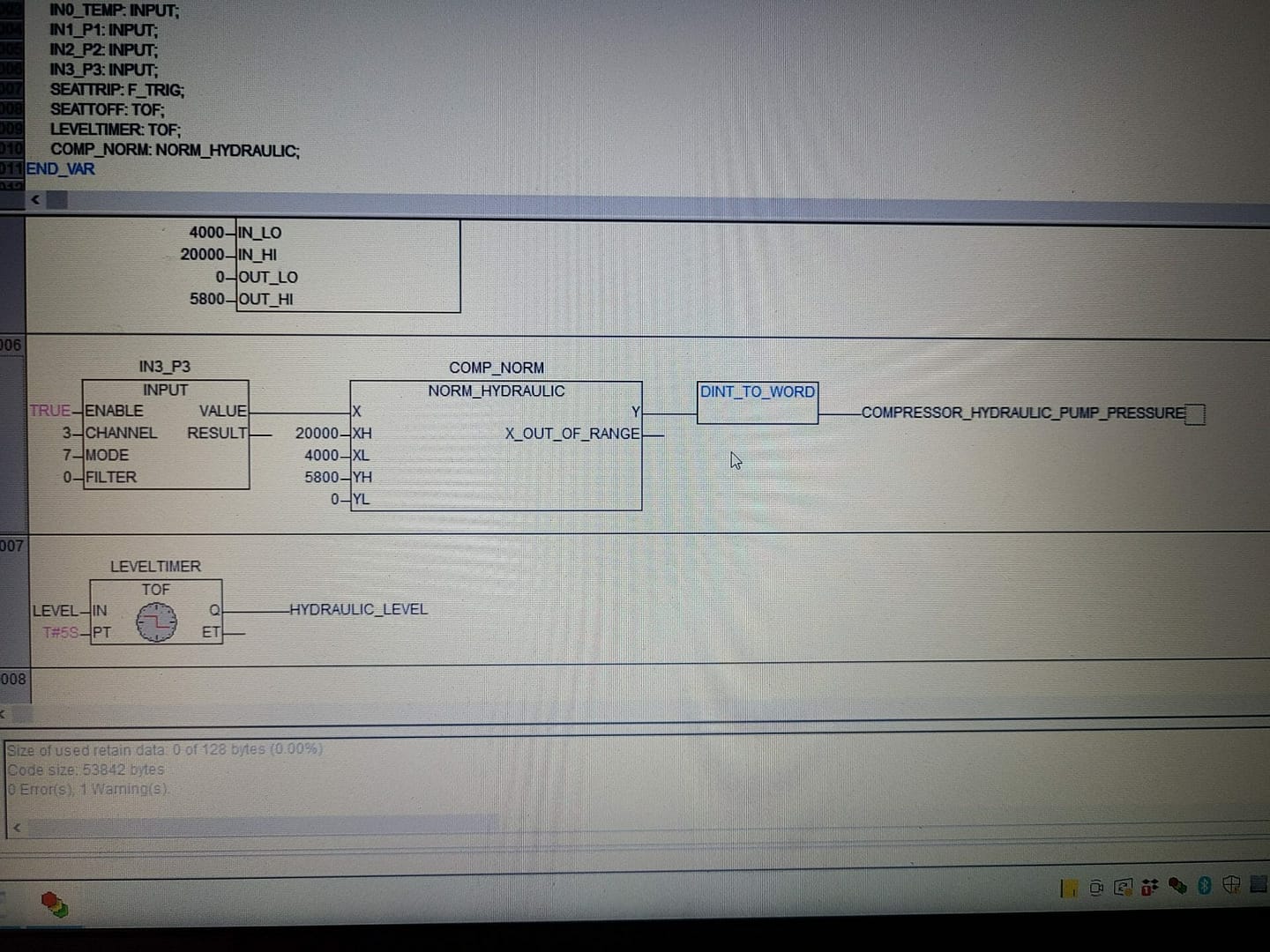
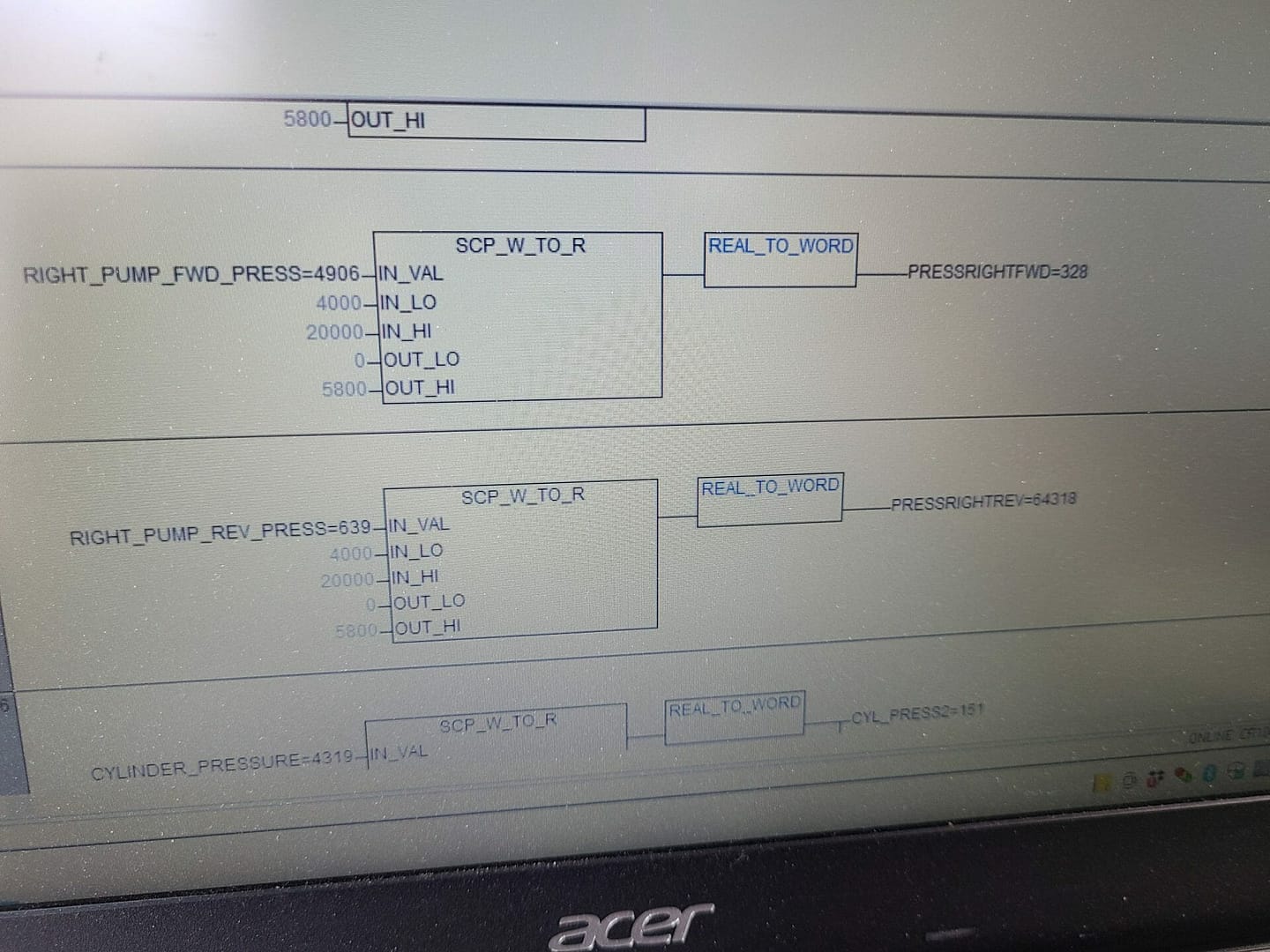
The programming was done using IEC 61131-3 through a combination of function blocks, instruction list, and structured text. SAE J1939 was used as the communication protocol.
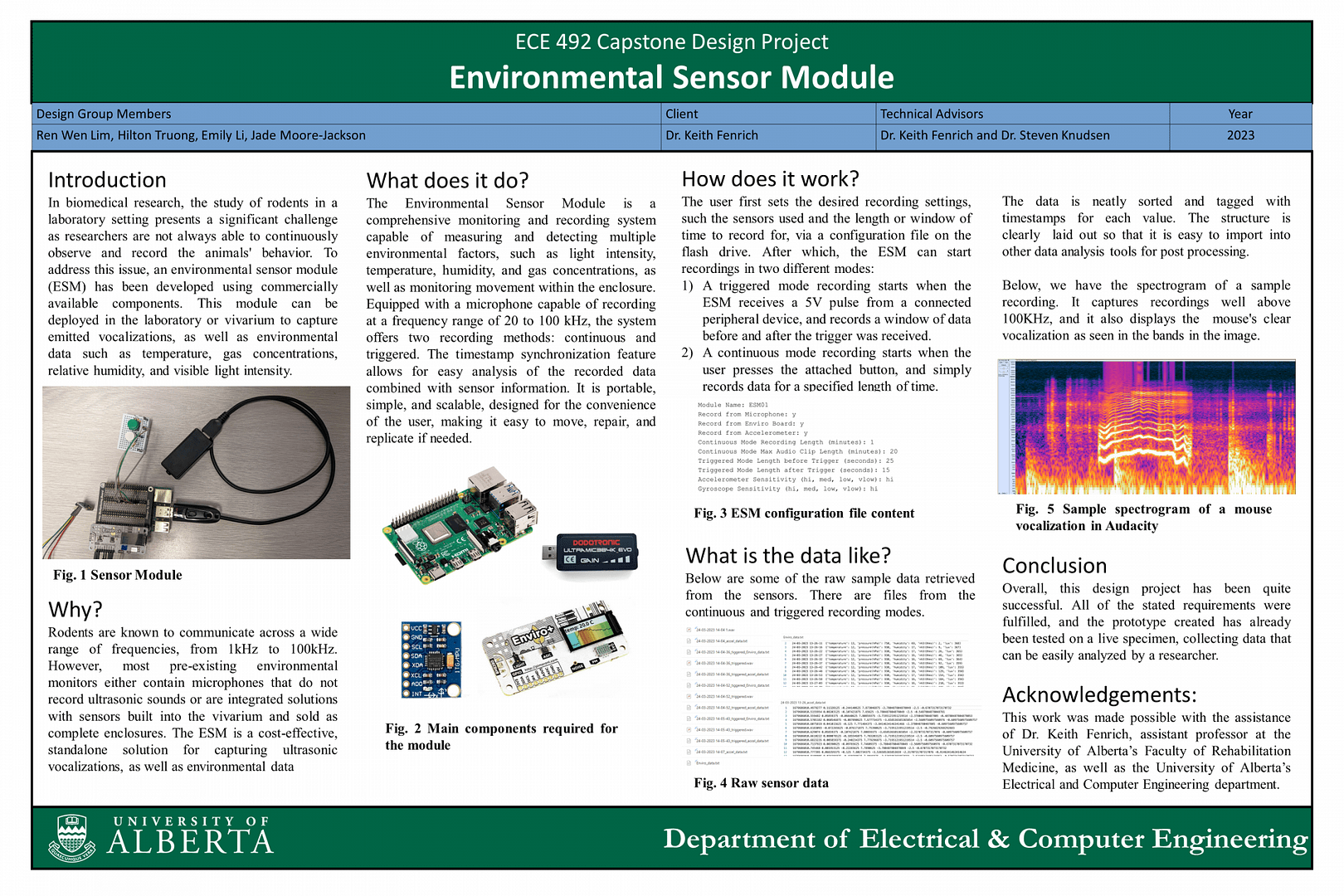
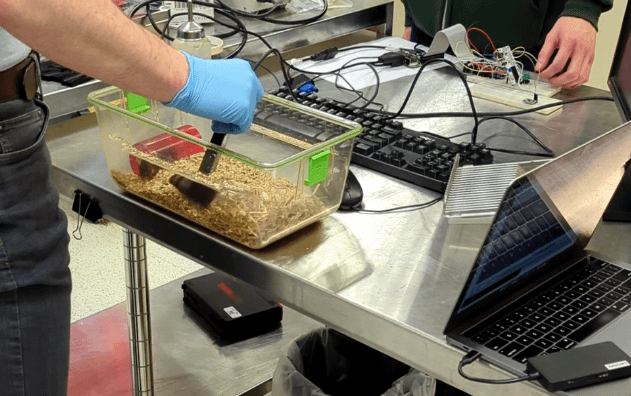
In this project we developed an environmental sensor module (ESM) based on the Raspberry Pi platform.
Existing monitoring modules lack the ability to record sounds in the ultrasonic range and are expensive for researchers to integrate. An ESM prototype was designed, developed, and tested. This ESM module consisted of an Ultramic 384k EVO microphone capable of recording from 20 to 384 kHz, an MPU-6050 accelerometer for detecting cage disturbances, and an Enviro+ Air Quality board for detecting environmental changes. The software was custom developed using Python, and provides functionality for the continuous and triggered recording modes. GPIO pins on the Raspberry Pi are used to provide 5V signals to activate each of the recording modes.
The module is designed to be integrated into vivariums for capturing acoustic vocalizations and monitoring environmental conditions. The ESM can be used to record ultrasonic sounds and collect data on light, temperature, humidity, gas, and motion. The resulting data is timestamped and output to a file for analysis.
Providing a low-cost and flexible solution for vivarium monitoring, animal vocalization research, and further education.
Lean is the concept of efficient manufacturing & operations that grew out of the Toyota Production System. Toyota is recognized for being the epitome of lean, they have created a lean learning culture of employees at all levels that are focused on continuous improvement in everything they do, every day. The lean methodology is based on the philosophy of defining value from the customer’s viewpoint, and continually improving the way in which value is delivered. This is achieved by eliminating every use of resources that is wasteful, or that does not contribute to the value goal. Lean not only allows for cost reduction while improving quality, but it can also position a company to achieve tremendous growth with minimal waste. This is done by empowering every individual worker to achieve his or her full potential, and therefore make the greatest possible contribution.
The goal of empowerment is based on the idea of showing respect for people. Respect for people extends beyond just the end customer and can include the workers, suppliers, and society. For the end customer, lean strives to maximize value delivery while minimizing waste in the process. For the workers, lean aims to maximize human potential by empowering them to continuously improve their work.
Under the lean methodology wastes, or wasteful activities, are commonly called “muda” and they are typically categorized into 8 different types. These types are defined as being defects, overproduction, waiting, unused talent, transportation, inventory, motion, and over-processing.
At the heart of the lean philosophy is the concept of “kaizen” or continuous improvement. The goal of continuous improvement is to make marginal improvements and changes that further eliminate waste in the value delivery process. To do this, lean leaders must go where value is created – commonly known as the “gemba”. During a gemba walk, leaders can see the state of the work process and often spend their time developing their people. They motivate workers to actively identify problems and to look for opportunities for improvement. This can encourage greater communication, transparency, and trust between the lower level of employees and leadership.
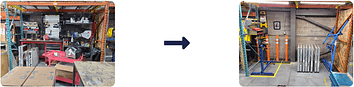
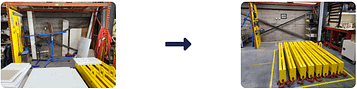
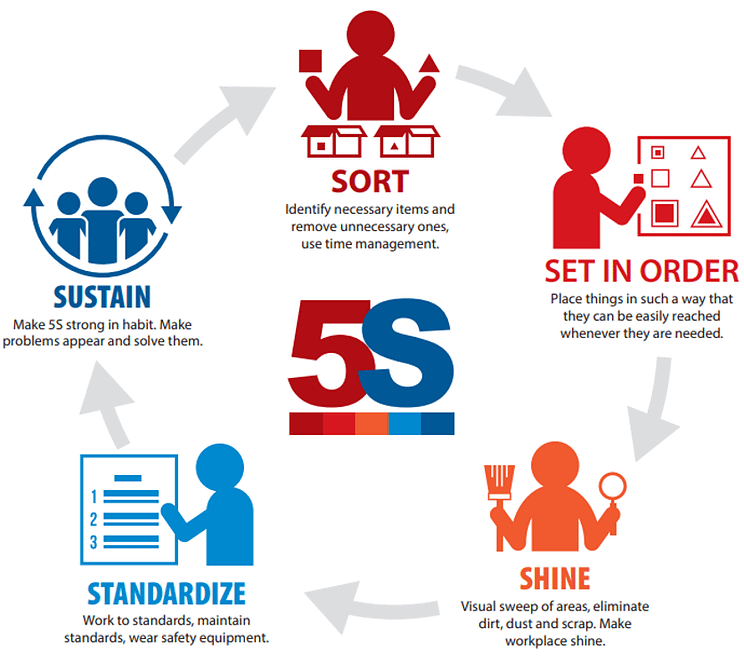
Often summarized by the philosophy “a place for everything and everything in its place”. 5S is a five-step strategy to minimize waste, maximize efficiency, and optimize productivity. This is accomplished through maintaining an orderly workplace and using visual cues to achieve more consistent operational results. Having everything clean, neat, and in the proper location enhances productivity and quality because it helps make tools and materials easier to find, it helps standardize the work processes, and it helps make problems more visible. Implementation of this strategy “cleans up” and organizes the workplace based on its existing configuration, and it is typically the first lean method which organizations implement.
The 5S pillars, Sort (Seiri), Set in Order (Seiton), Shine (Seiso), Standardize (Seiketsu), and Sustain (Shitsuke), provide a methodology for organizing, cleaning, developing, and sustaining a productive work environment. In the daily work of a company, routines that maintain organization and orderliness are essential to a smooth and efficient flow of activities. This lean method encourages workers to improve their working conditions and helps them learn to reduce waste, unplanned downtime from reworks, and in-process inventory.
Congratulations on making it to the end, and thanks for taking the time to read (or scroll) through it all! Haha
I’m always looking for a new challenge, click the button below if you’ve got something!