
There are many modern problems we face as engineers, but one of the most important to me is the issue of sustainability.

To engineers, sustainability means incorporating principles and practices into their work that promote long-term environmental, social, and economic viability. It involves considering the full life cycle of a project or system, from design to disposal, and finding ways to minimize negative impacts on the environment and society.
The goal is to balance the needs of the present without compromising the ability of future generations to meet their own needs. Modern sustainability also entails considering the social equity aspect, ensuring that engineering projects and technologies benefit all stakeholders, including marginalized communities.
Ultimately, we must approach engineering with a holistic mindset, recognizing the interconnectedness of environmental, social, and economic factors, as we work towards a better, more sustainable future for all.
Below are some different challenges that are of personal interest.
Energy
Achieving a balanced energy portfolio that incorporates both fossil fuels and renewables is a growing priority. While fossil fuels have been the dominant energy source for over 150 years, the negative environmental consequences associated with their extraction, production, and combustion are increasingly evident. By transitioning to a more sustainable energy mix that integrates nuclear and renewables such as solar, wind, hydro, and geothermal power, we can significantly reduce our carbon footprint and mitigate the impacts of climate change.
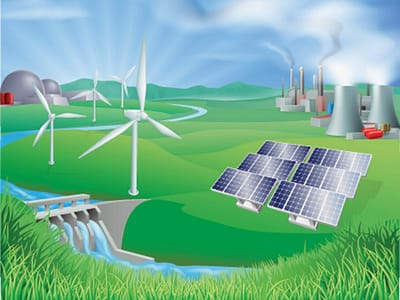
Sustainability lies in finding the optimal balance between the reliability and energy density of fossil fuels and the clean, renewable nature of alternative sources. This approach ensures a smooth and gradual transition while meeting the growing global energy demands and maintaining a strong economy. By embracing sustainable practices and technologies, we can minimize the impact of fossil fuels, diversify our energy sources, enhance energy security, and create a more resilient and sustainable energy system for future generations.
Therefore, as stewards of technological advancements, it is our duty to integrate sustainability principles into every aspect of engineering, from design and construction to operation and maintenance. Paving the way for a cleaner, greener, and more sustainable energy future.
Ethical Supply Chains
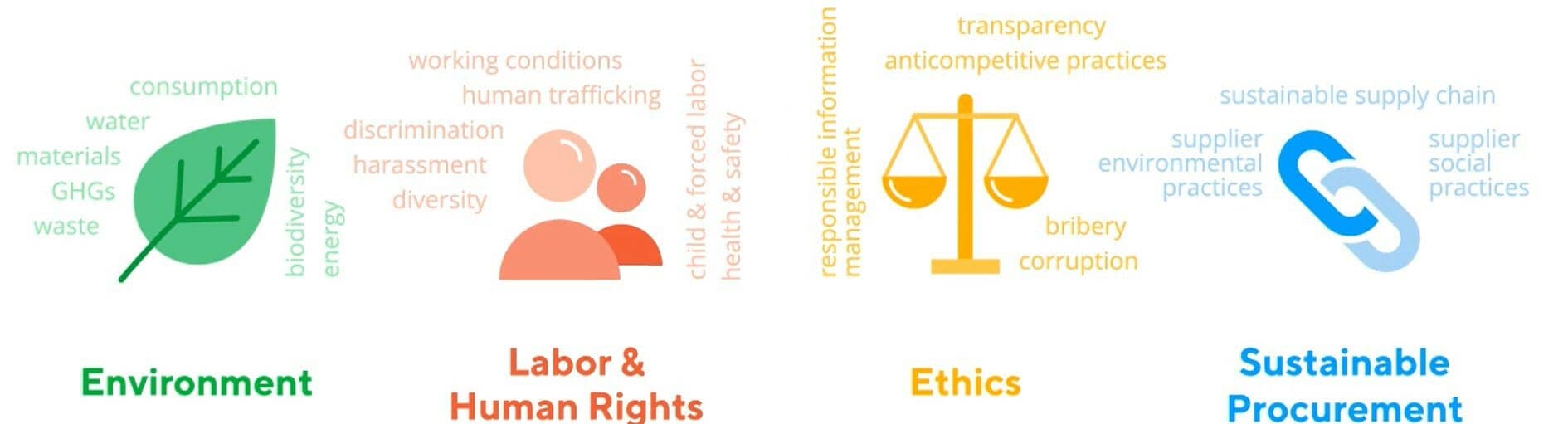
With the growing demand for electrical storage-based green technologies, there is a corresponding rise in the extraction of raw materials, particularly lithium, cobalt, nickel, and manganese, which are essential for battery manufacturing. This increased extraction raises concerns similar to those previously encountered with “conflict minerals”, whereby the sourcing locations of these minerals often involve worker exploitation and child labor. Therefore, it is imperative for industry-leading companies to enforce strict ethical standards and hold their suppliers accountable to ensure responsible sourcing practices.
Space Debris
Based on statistical models produced by ESA’s space debris office, it is estimated that there are:
36,500
Objects larger than 10cm
1,000,000
Objects between 1-10cm
130,000,000
Objects between 1mm to 1cm
The importance of sustainability in addressing space debris cannot be overstated.
Space debris poses a significant threat to our current and planned space missions, satellite systems, and even future human space exploration. With the increasing number of satellites being deployed, and the accumulation of defunct spacecraft, there is an escalating amount of debris fragments trapped in Earth’s orbit.
Once there becomes too much debris in Earth’s orbit, it could result in a chain reaction. Where a single collision leads to another set of collisions, and those collisions all then lead to their own set of collisions, and over, and over, and over. Each collision creating new space debris, to the point where Earth’s orbit becomes unusable. This is called the Kessler Syndrome (after American scientist Donald Kessler).
With the advent of mega-constellations composed of thousands of satellites, there are fears that the risk of an initial collision is rapidly multiplying. Posing a real threat to the satellite network that we now depend on for global communications, navigation, financial services, weather forecasting, security, agriculture… it goes on and on.

There is a pressing need to mitigate this issue.
Engineers will have a crucial role in developing innovative solutions for debris mitigation, such as designing satellites with built-in deorbiting capabilities, implementing responsible end-of-life disposal strategies, and exploring technologies for active debris removal.
By prioritizing sustainability in space debris management, we can ensure the long-term sustainability and safety of our space activities, preserve the valuable orbital real estate for future missions, and prevent potential collisions that could create even more debris. Embracing sustainable practices in space debris mitigation is not just a necessity but a responsibility to protect the integrity of space and pave the way for continued exploration and utilization of the final frontier.