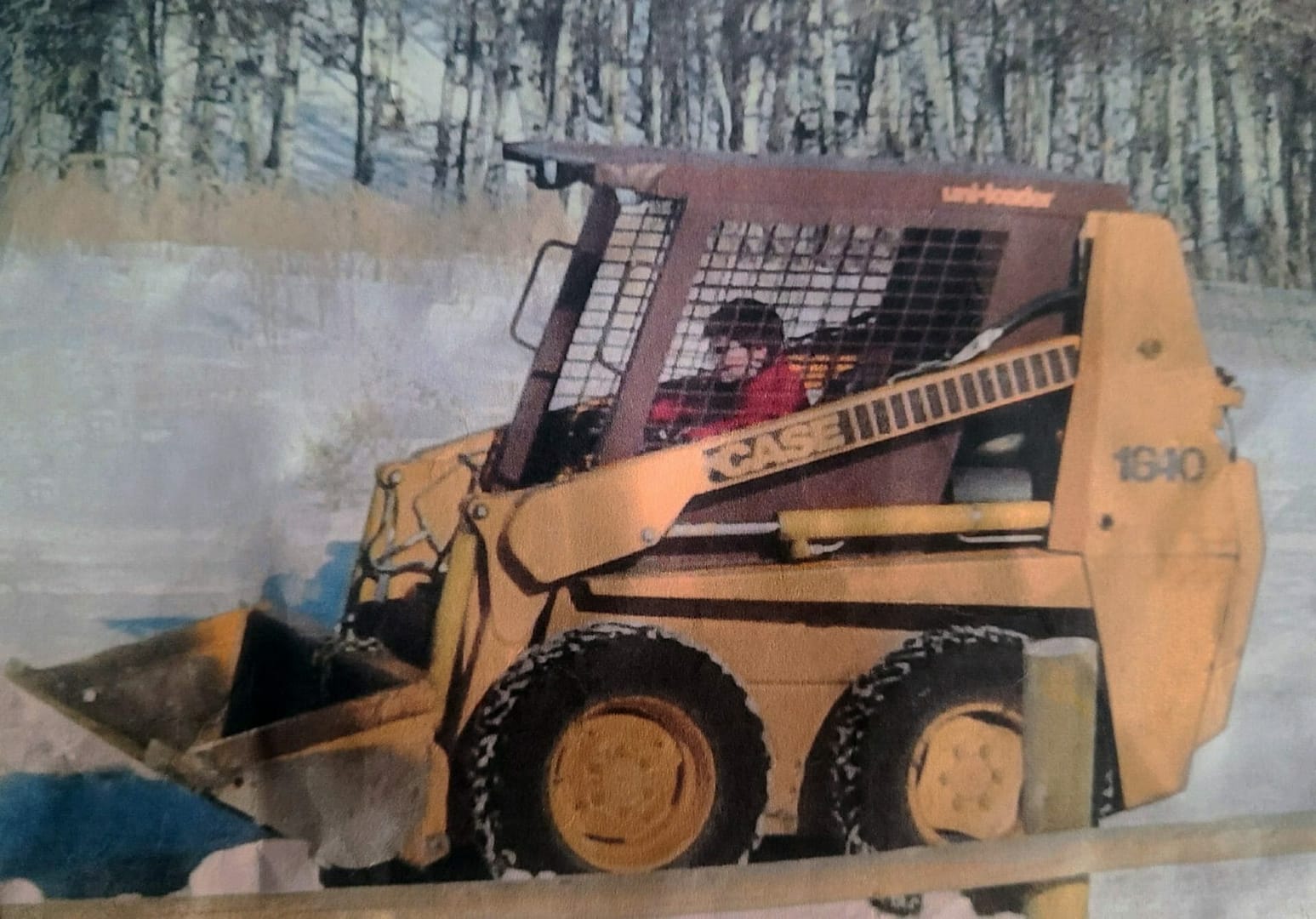
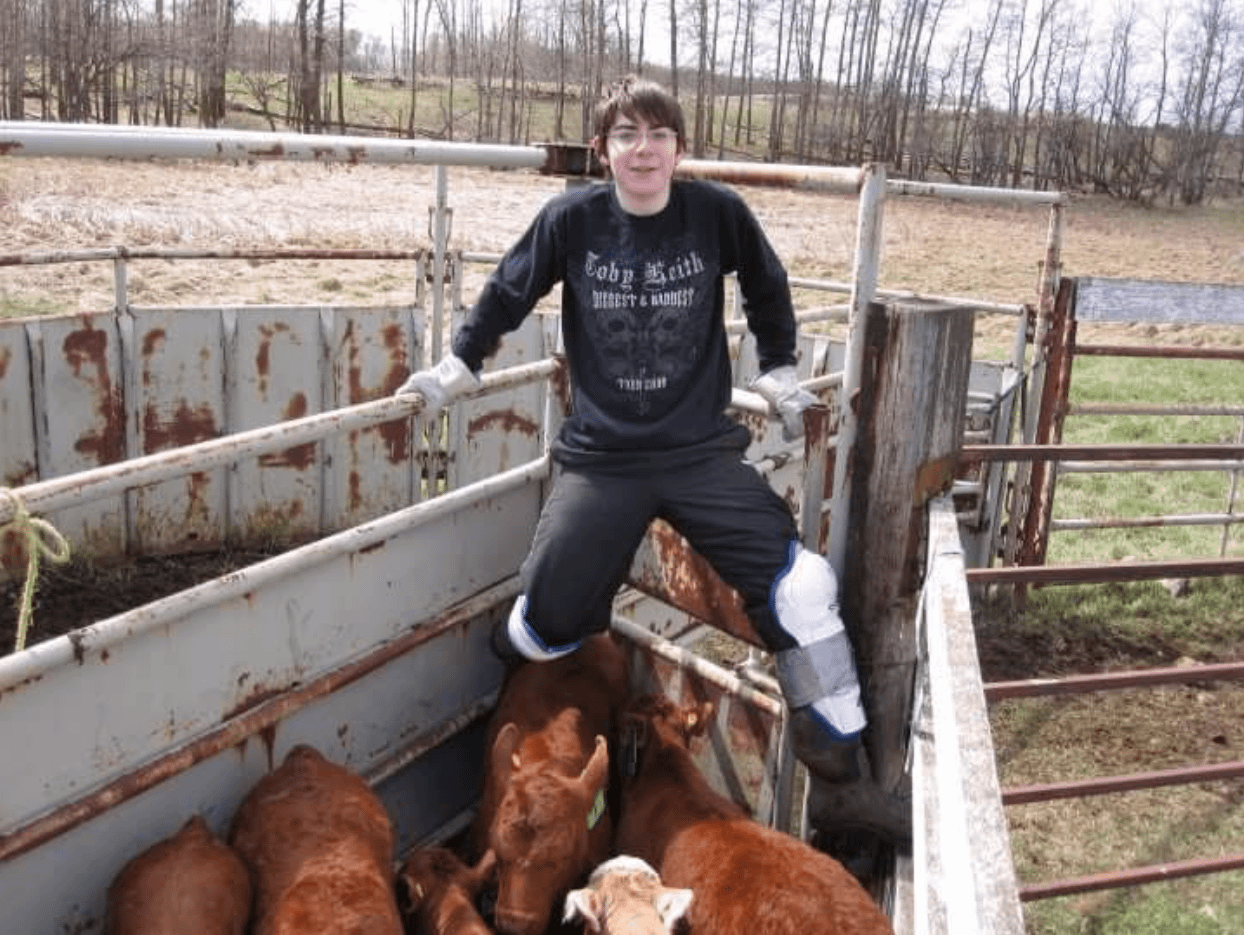
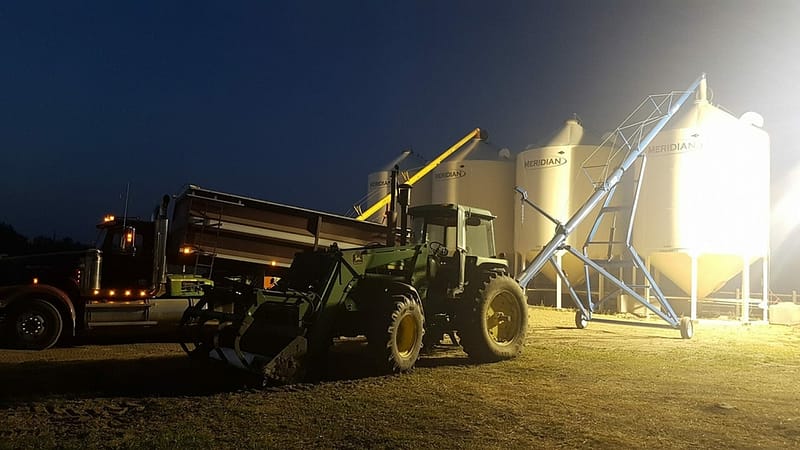
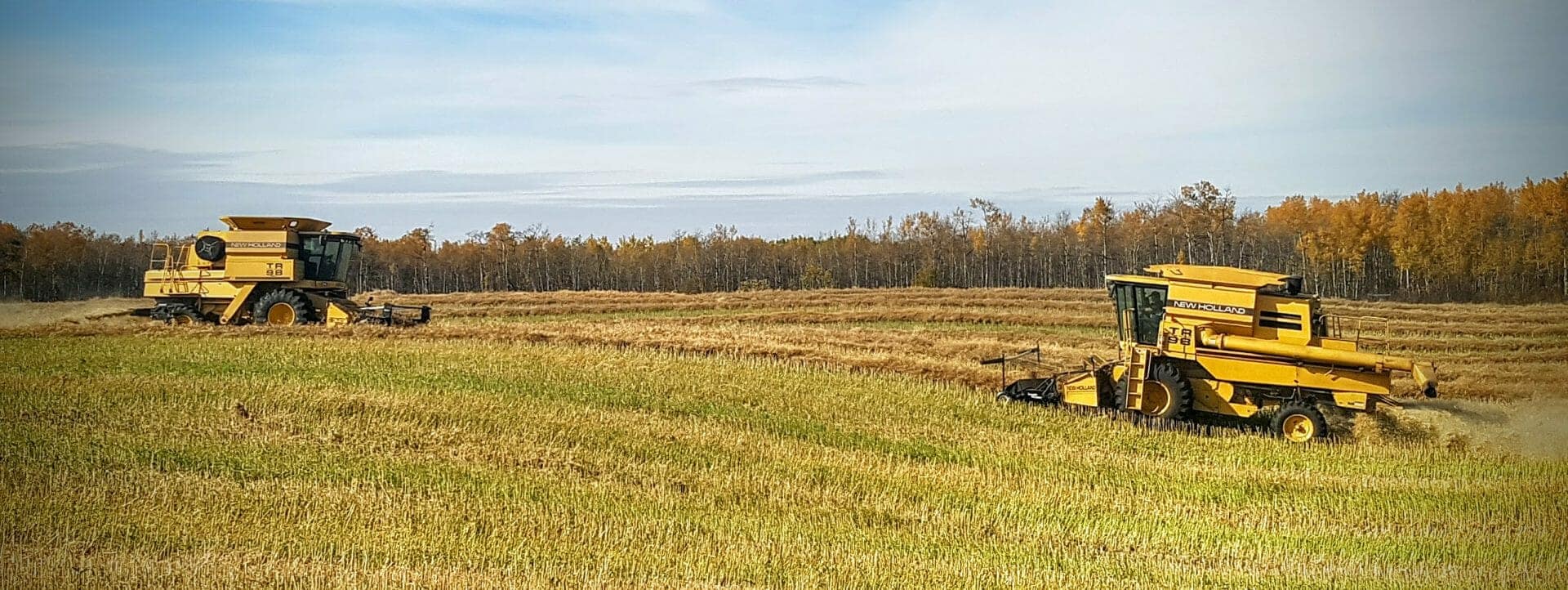
My story started out in the city of Seattle, Washington (United States of America) where I was born, but it quickly shifted to a farm outside of a small town called Delburne, Alberta (Canada). There I spent most of my time growing up, working and playing in the countryside, learning valuable lessons while helping care for the cattle and the crops. Thanks to my grandparents help, I made my first income by buying a cow and selling my first calf! Getting the taste for making money would soon turn into a pretty strong motivator in my life to have persistence with my endeavors. This has been reinforced by having a family who have all remained extremely hardworking my entire life.
My grandparents and I had another deal made:
For each subject I received honors in, they would give me some money as a reward.
Fuel to my fire.
In grade 2 my class was assigned a new homeroom teacher, and we were blessed to get Mrs. Roberta Volker, a truly amazing lady. In the world of multigenerational small towns, it turned out that she had taught one of my parents years ago! In reflection, it’s crazy how there’s always just a few mentors who really differentiate themselves with the impact they have on our lives and the trajectory we are on, especially with academics. Mrs. Volker would teach me to read properly, launching me into a world of novels where I’d get lost in all the different storylines. She would build the foundations for the logical skills I needed to learn, while also inspiring us to have a thirst for knowledge. Oh, and she possibly saved my life? Turns out I had septicemia, aka blood poisoning, on the bottom of my foot that was spreading in a distinctive line unbeknownst to anyone. She was the one to notice something and discover the problem, alerting my parents who took me to get medical treatment. I could write endlessly about the wonderful experiences I had in the class and the influences they had on me, but for the sake of brevity there was one important thing she did: recognized those who had high grades with an honor roll pin.
Remember that deal I made? Oh ya that’s right, it started here in grade 2! The very first time I received honors.
I’d get Mrs. Volker again for my grade 3 teacher. Cementing the foundation she previously built, and setting me up for future achievements. Like receiving honor roll again, which I proudly did! Then again in grade 4, grade 5, grade 6… 7, 8, 9, 10, 11, and finally grade 12. Surprising my grandparents, I made the most out of that deal hahaha never missing a year, or a subject!
I will always aspire to make my family proud,
I owe so much to what they taught me,
And the opportunities they worked to provide me with.
Energy Industry
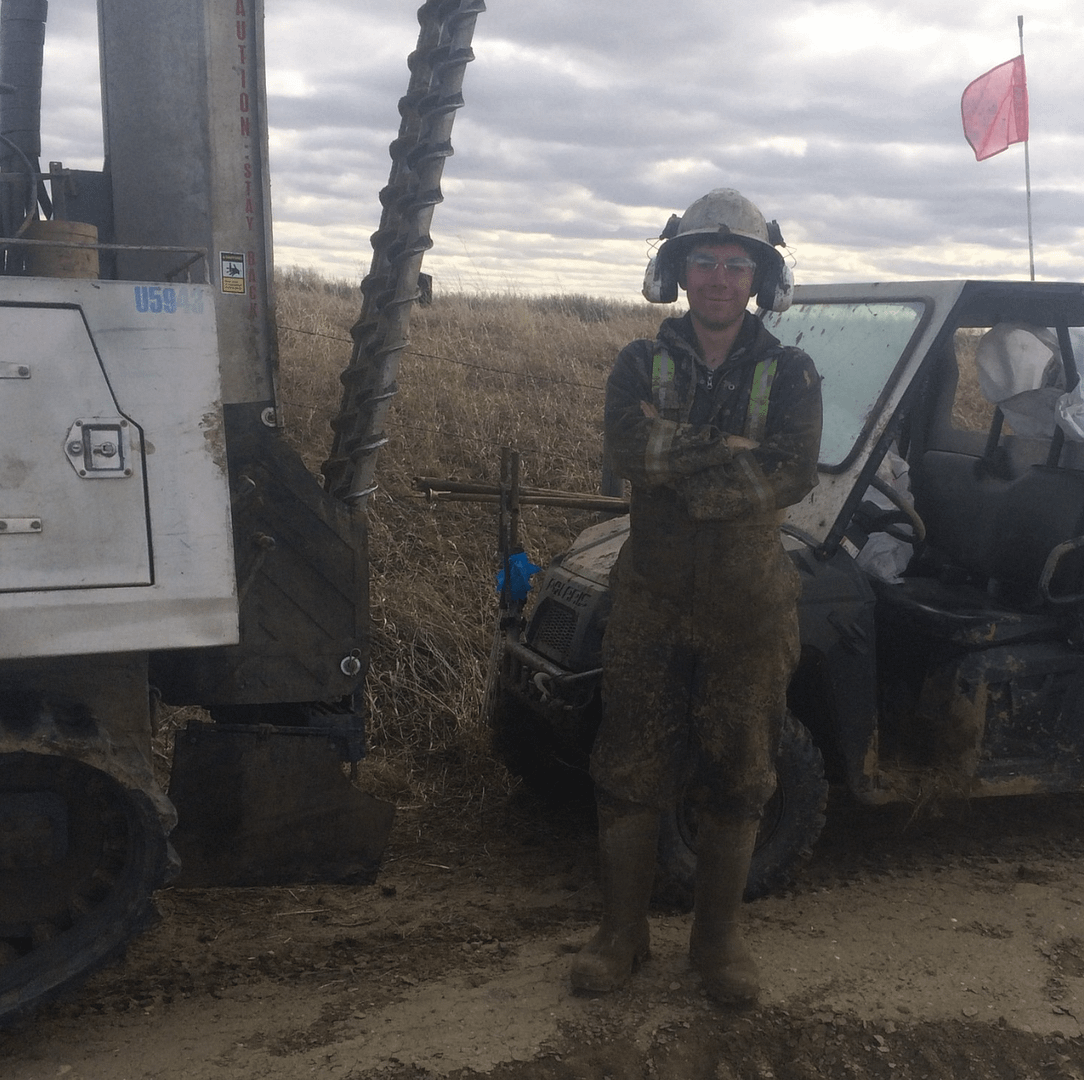
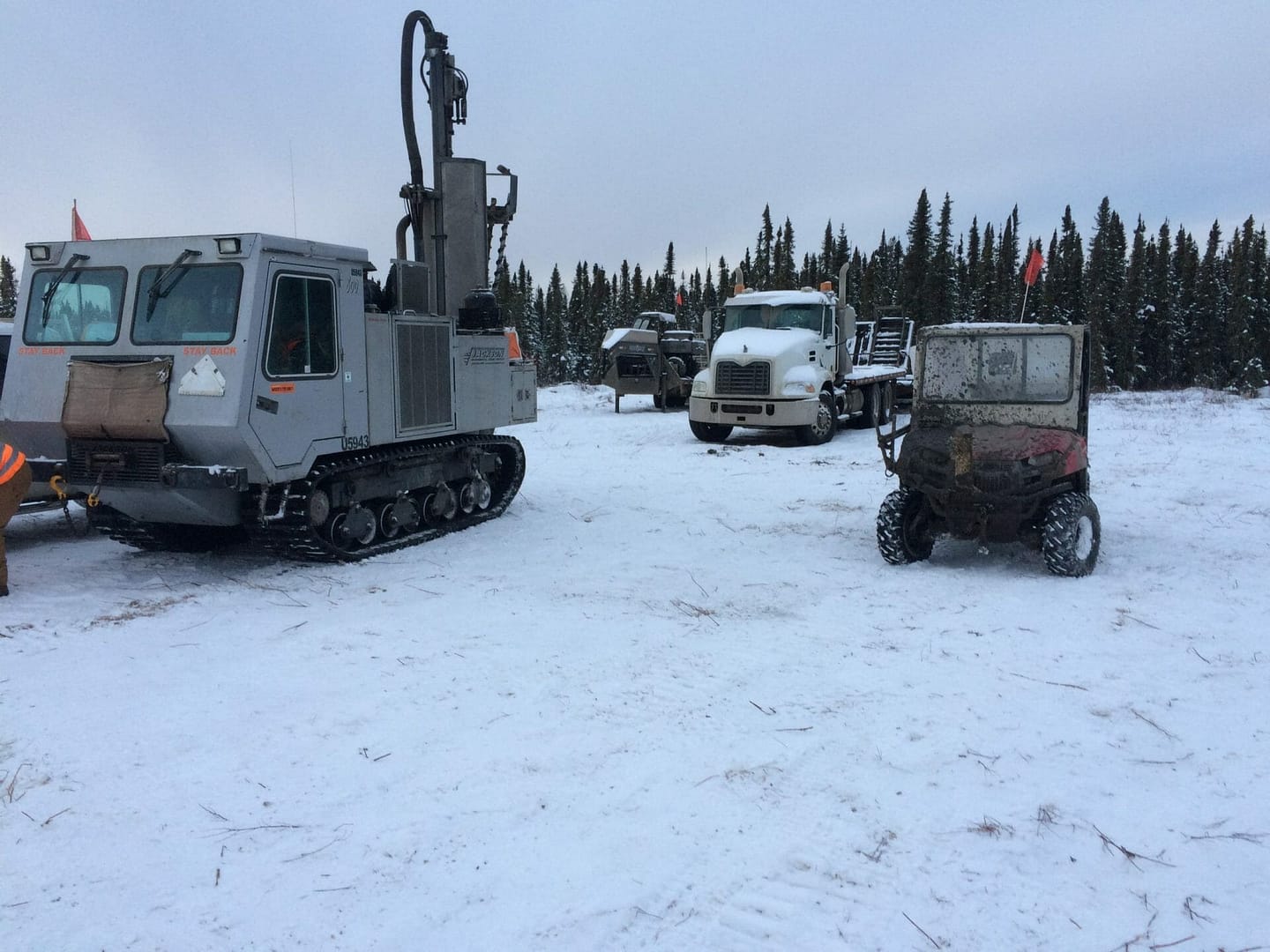
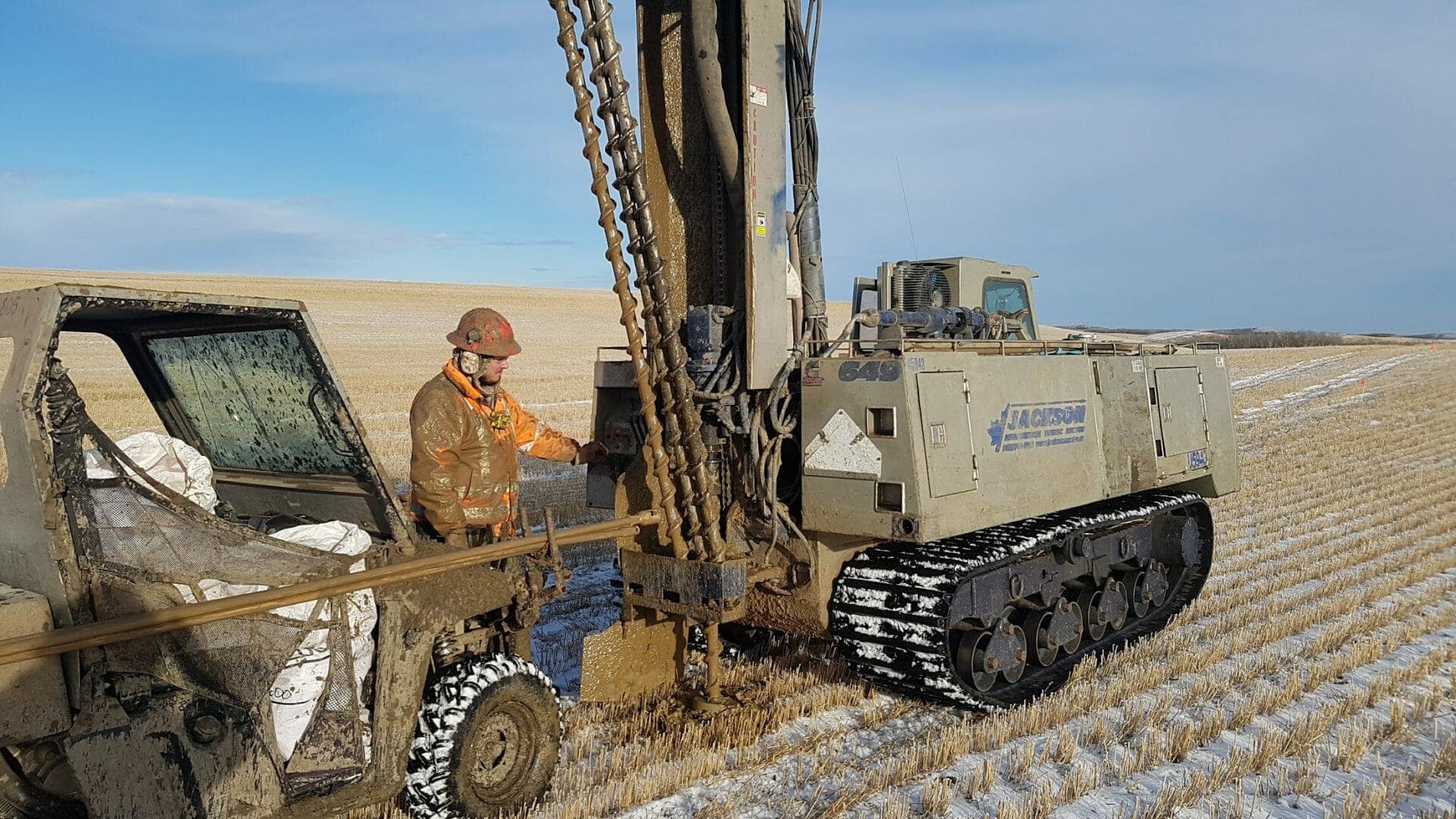
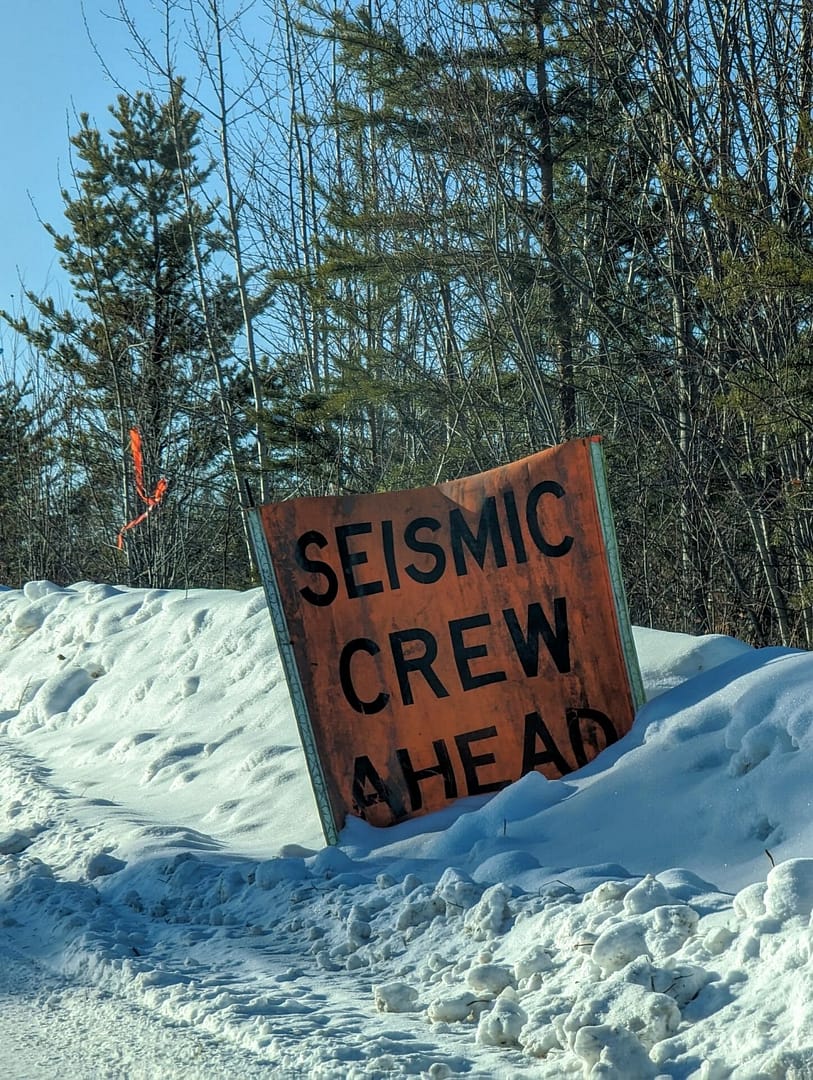
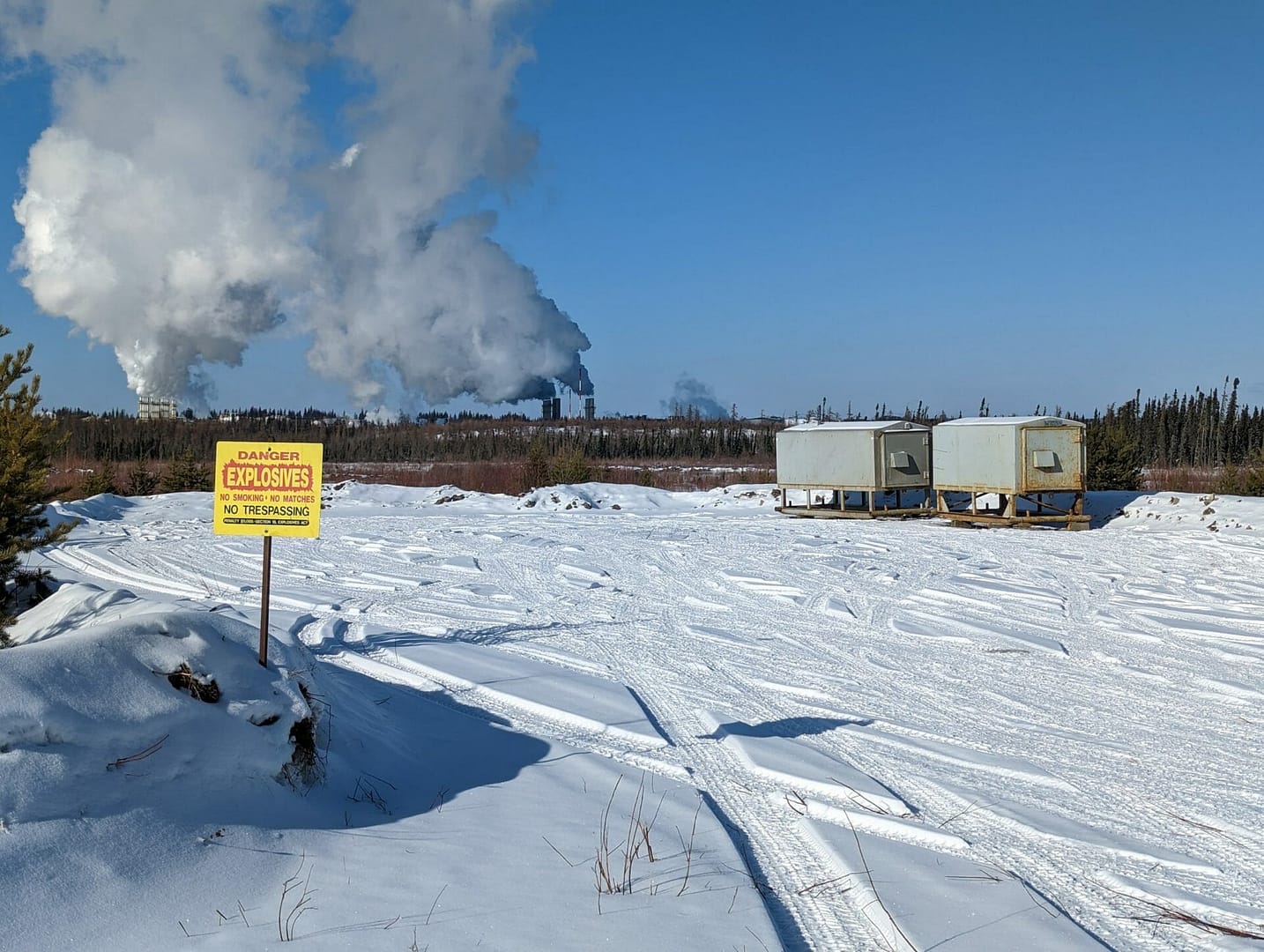
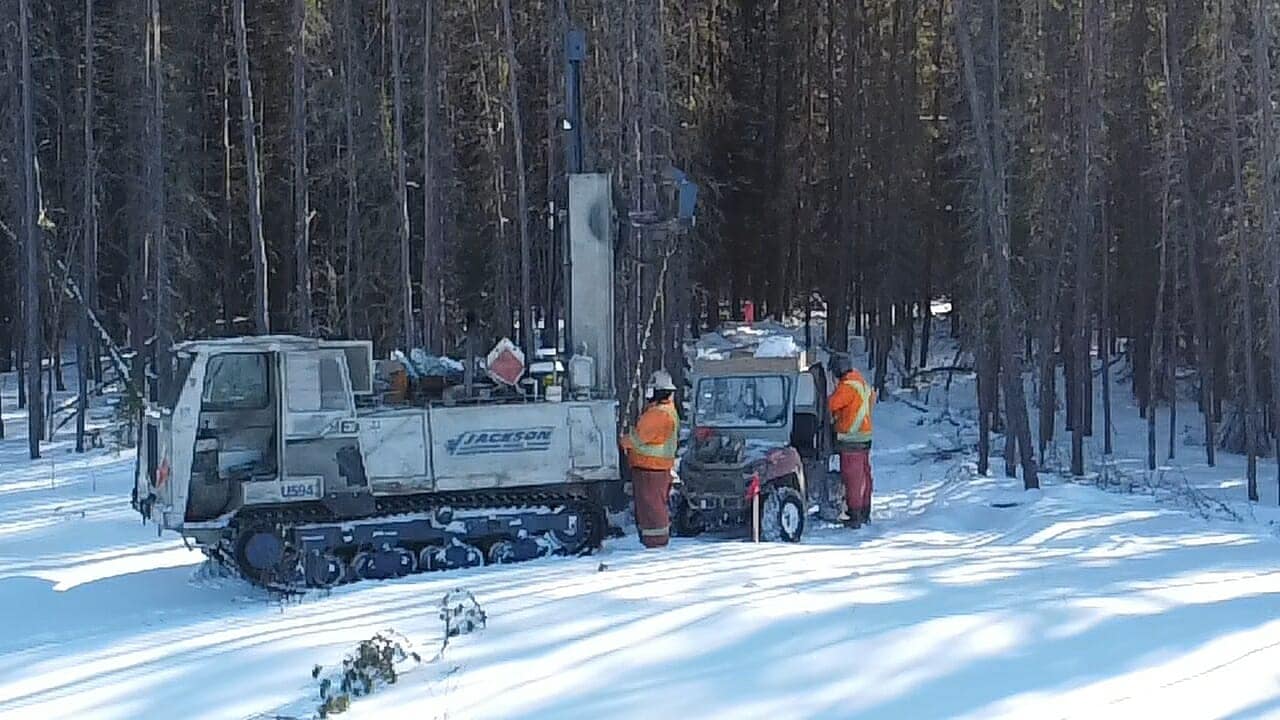
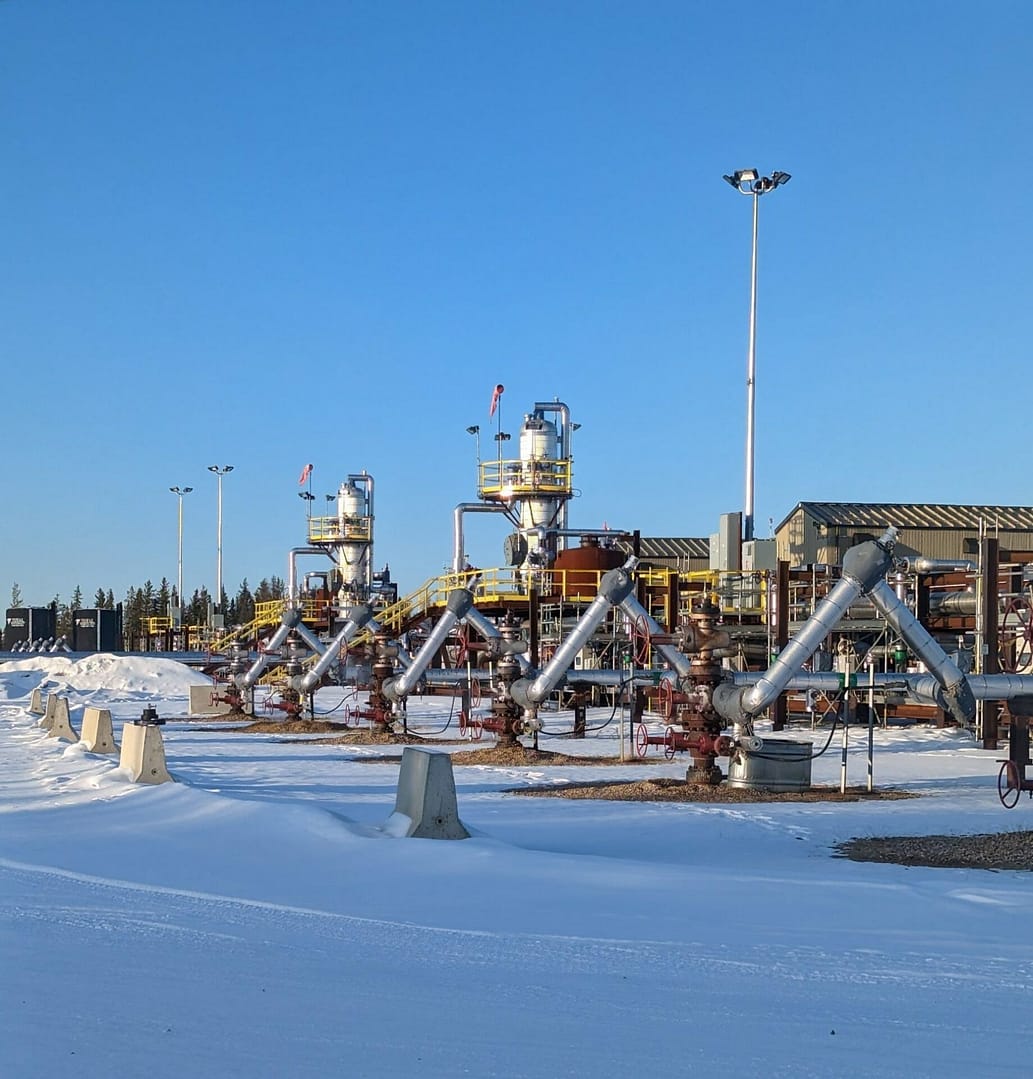
During high school I worked in a shop that did seismic drilling operations, this meant lots of maintenance and fabrication work. Here I learned how to diagnose and fix problems with all sorts of different equipment. After completing high school I decided to try working in the field with the actual drilling operations, leading me to become a seismic drill assist. As seen below, it was a very muddy introduction to working in the energy industry!
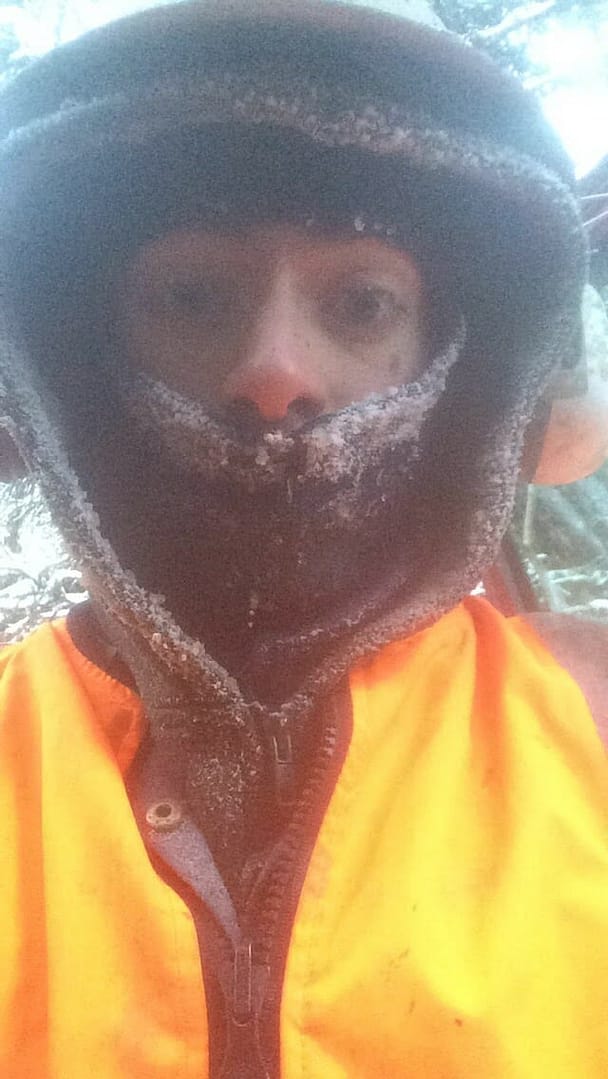
This role would teach me valuable lessons of perseverance, the ability to focus on the good when faced with adversity, to keep pushing forward one step at a time. It would also provide a source of gratitude as my career progressed. Whenever I start to take my current position for granted I reflect on the hard work of the past, and remember that there are many still out there in that position. Frustrations in the heated office aren’t so bad when I remember the time I had ice built up on my eyelashes, nose, and anywhere else the bitter cold could find moisture.
I got to travel all over northern B.C, Alberta, Saskatchewan doing this work, and while I wish I could say it was nice being able to see these parts of Canada… The blizzards and -30C weather usually put a damper on that!
When I first entered the role as a seismic drill assist I was told,
“If you can make it through this job, you’ll be able to make it through almost anything”,
And when you have seasoned Newfies telling you it’s a hard job, you can be sure it’s true.
During my last time out in the field as a seismic drill assistant, I wanted to create a video demonstration of the role. Below you can get a glimpse into what it looks like to perform this role, in the video you’ll watch me “load a hole” which is the main activity a drill assist does.
The basic steps performed are:
Retrieve the dynamite and blasting cap
Punch and prime the explosive
Secure the blasting cap wire to the dynamite by two half hitch’s, and cover cap with orange protective hole point
Push the charge to the bottom of the hole
Pull the loading poles out
Push in the hole plug
Test for continuity to confirm the cap wires didn’t get damaged while loading and the charge will still detonate
Seal with bentonite and do a quick clean-up by stomping the clay/mud flat.
I can count on one hand how many poles I broke during my entire time in this role, so I cannot even begin to describe my surprise when the pole snapped, what are the odds! well… I could calculate that, but it’s better a mystery!
1 down, 119 to go!
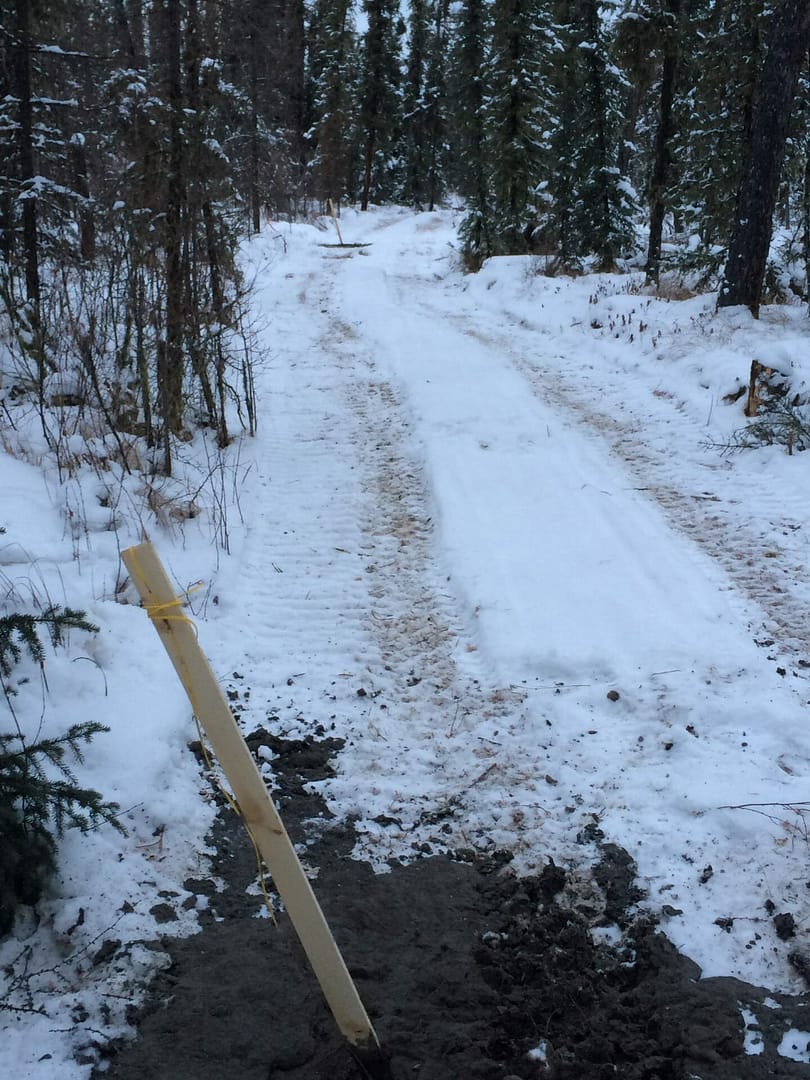
A normal day would consist of around 120 holes drilled, give or take 10-20 depending on factors in the field, and usually a metal permit tag would need to be inscribed with the current shot & line number, then stapled to a nearby tree. That additional task might not seem like much, but it can have a huge impact on how fast you have to be. See in the video the drill was waiting for me, but normally it’s a race to stay caught up. As soon as I test the blasting cap is good, the drill will be moving to the next hole, and by time I start prepping, the drill will be about 30% done. I need to be done with permitting, prepping, and retrieve the charge (like on the video) before the drill finishes so that as soon as the drill moves off the hole, I am ready to prime the charge.
Did I mention it takes around a minute and a half, from start to finish, for the drill to get the hole drilled? The pace is quick, but at least you don’t feel the cold when you are moving that much!
However, what does still feel the cold in -30C is the water and mud. Why do I bring this up? Well the drill uses water as a drilling fluid which will leave the hole filled with water. So every time you plunge the loading poles down the hole, you coat them in the muddy water, and when you pull them back out that new layer freezes. Repeat this process 20-30 times, and those loading poles that started out weighing 20lbs quickly double, and then triple in weight.
After a few seasons of field work, I had performed the roles of a seismic drill assist, water carrier operator, class 1 truck operator, and drill operator. In the off seasons I assisted with updating the companies IT infrastructure, HSE policies, safety audits, and the onboarding process. Gaining extensive knowledge of excel I built spreadsheets to automate various workflows that were being performed manually. These spreadsheets helped reduce the amount of errors being produced, and had a tangible impact of increased productivity through improved efficiencies. Not only did it help these roles perform their jobs better, but by building in assistance to help find problems when they did arise, the people in these positions felt reduced pressure from their work and empowered knowing there was an additional failsafe to prevent errors slipping by. If you are familiar with the Swiss Cheese Model, an additional layer of safeguards can be the difference between an incident or a near miss.
With the knowledge and diverse experience across the company that I had gained, I was offered the role of a drilling supervisor. This position would be my first real experience with management and developing effective leadership. Luckily, I worked alongside two other experienced supervisors who were able to offer mentorship and help flourish my soft skills.
For my last winter out in the field I was promoted to the role of Drilling Supervisor.
That year, with two other supervisors, we oversaw a seismic crew of 32 people.
Completed a multi-million dollar drilling project.
Ahead of schedule, with 0 misfires, and no lost time injuries.
Instrumentation
Engineering
Technologies
Seeking to further develop my career I decided to go back to school. I always had an affinity to engineering but was wary about the knowledge gap in what I remembered from high school to what would be expected of me in first year engineering. So I made the decision to start with an engineering technologist diploma, this allowed me to study close to home and build up my learning skills, a test to see how I would do at university.
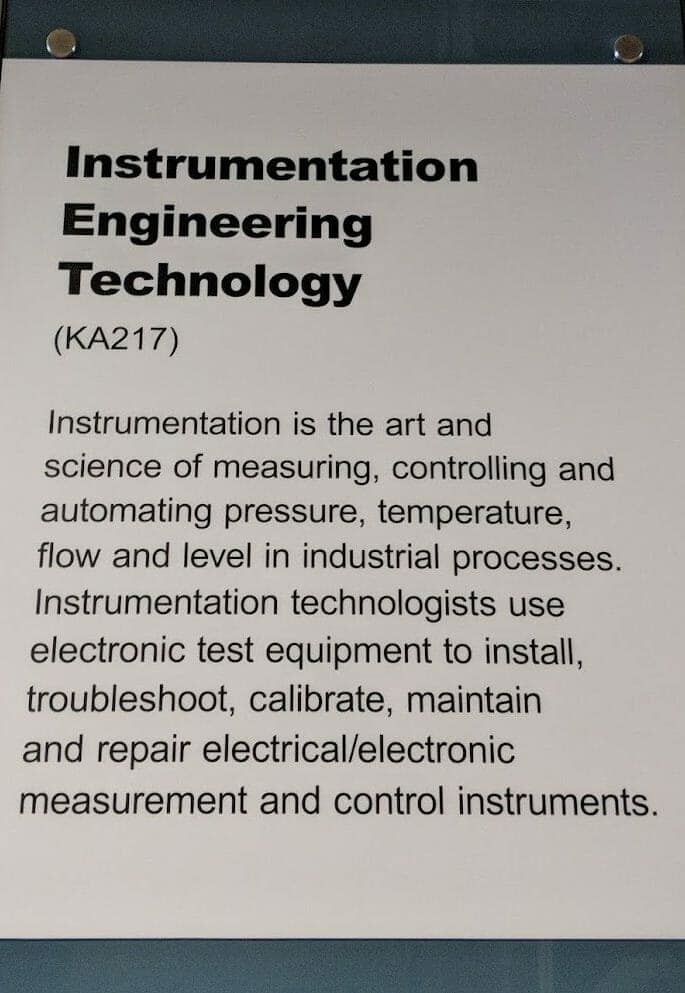
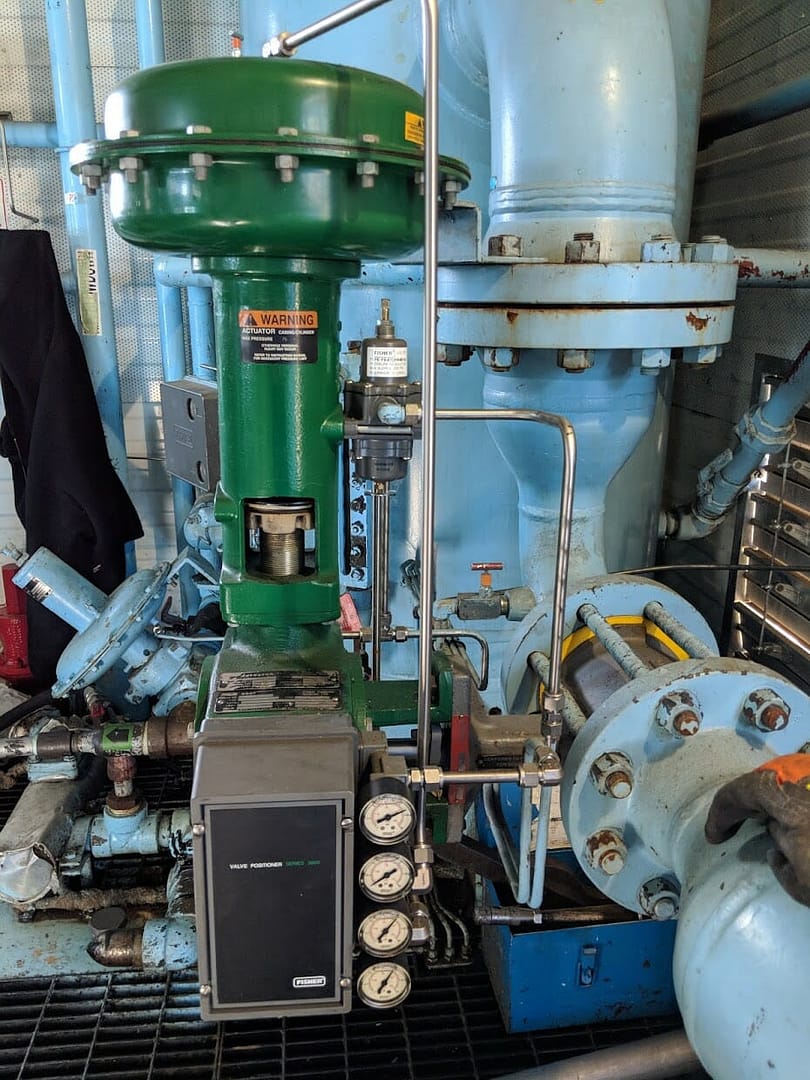
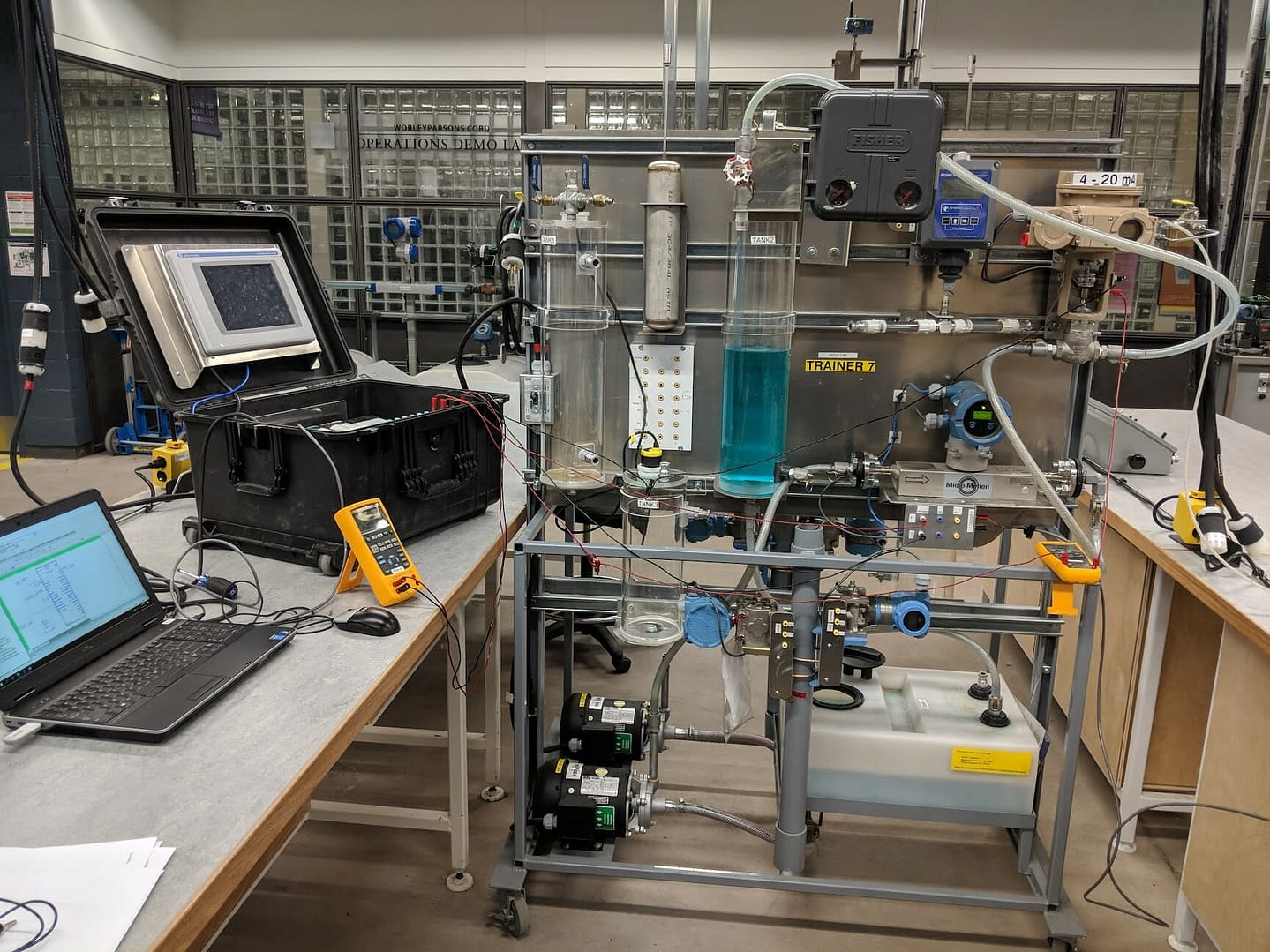
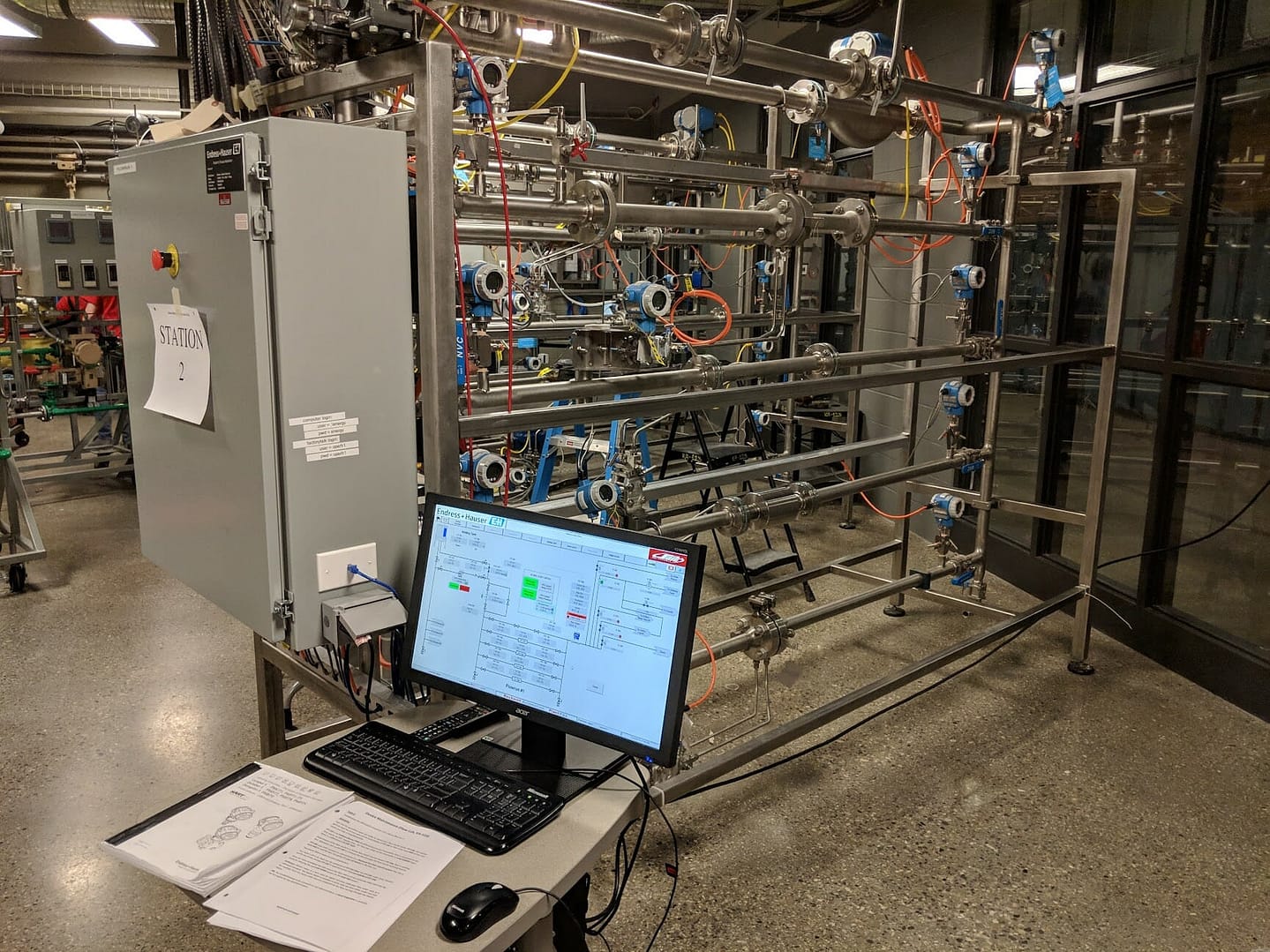
Following my first semester I had the option of entering into the stream of either Electrical, Mechanical, or Instrumentation. Originally I had enrolled as mechanical, but our instrumentation professor taught with such enthusiasm and passion that it drew me to the topic. Mr. Victor Mendez, M.Sc & P. Eng., would be instrumental in developing my post-secondary problem solving skills, and his support would be the encouragement I needed in deciding to pursue an engineering degree after college. He was another one of those teachers that I’ll never forget, in his class I discovered a love for control loops and system design. There was something so fascinating about having a system of inputs, into a tunable algorithm that would take the data and calculate the precise way to control the outputs (usually valves) in order to maintain process control, operating at a desired setpoint.
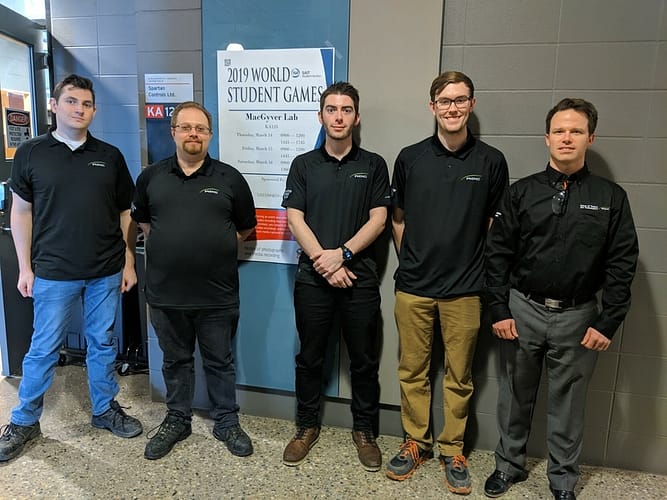
I found great support and mentorship through my friends and professors during my time at Red Deer College (now called, Red Deer Polytechnic), which led to some fun achievements. For instance, our instrumentation class was the first class of students to be taking this discipline, this allowed for a dynamic program with fresh content. I proudly got to participate in the 2019 World Student Games hosted by SAIT, we were actually the first group of students to ever enter the games from RDC.
I also helped contribute to the further refinement of the instrumentation program, the overall engineering technologies department direction, and the school-student relations by joining the three different student representation positions:
The RDC Engineering & Technologies Advisory Committee
The RDC Industry Advisory Committee
The RDC Student Council
Ultimately, I was able to achieve presidents honor roll each semester.
Graduating top of my class with distinction.
Nova Chemicals - Joffre Plant
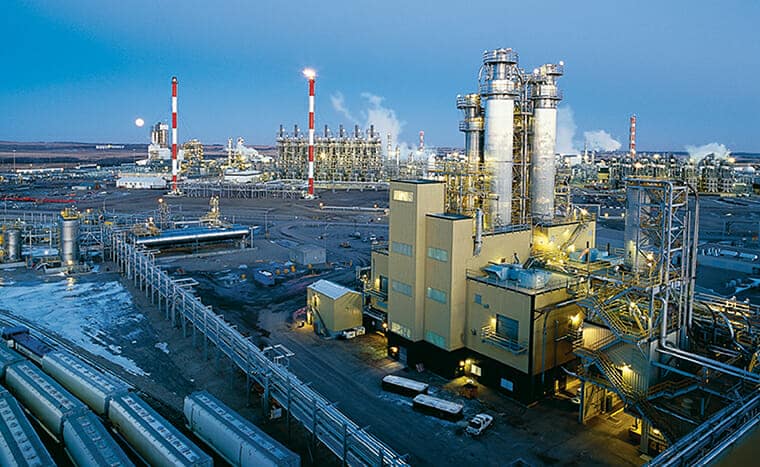
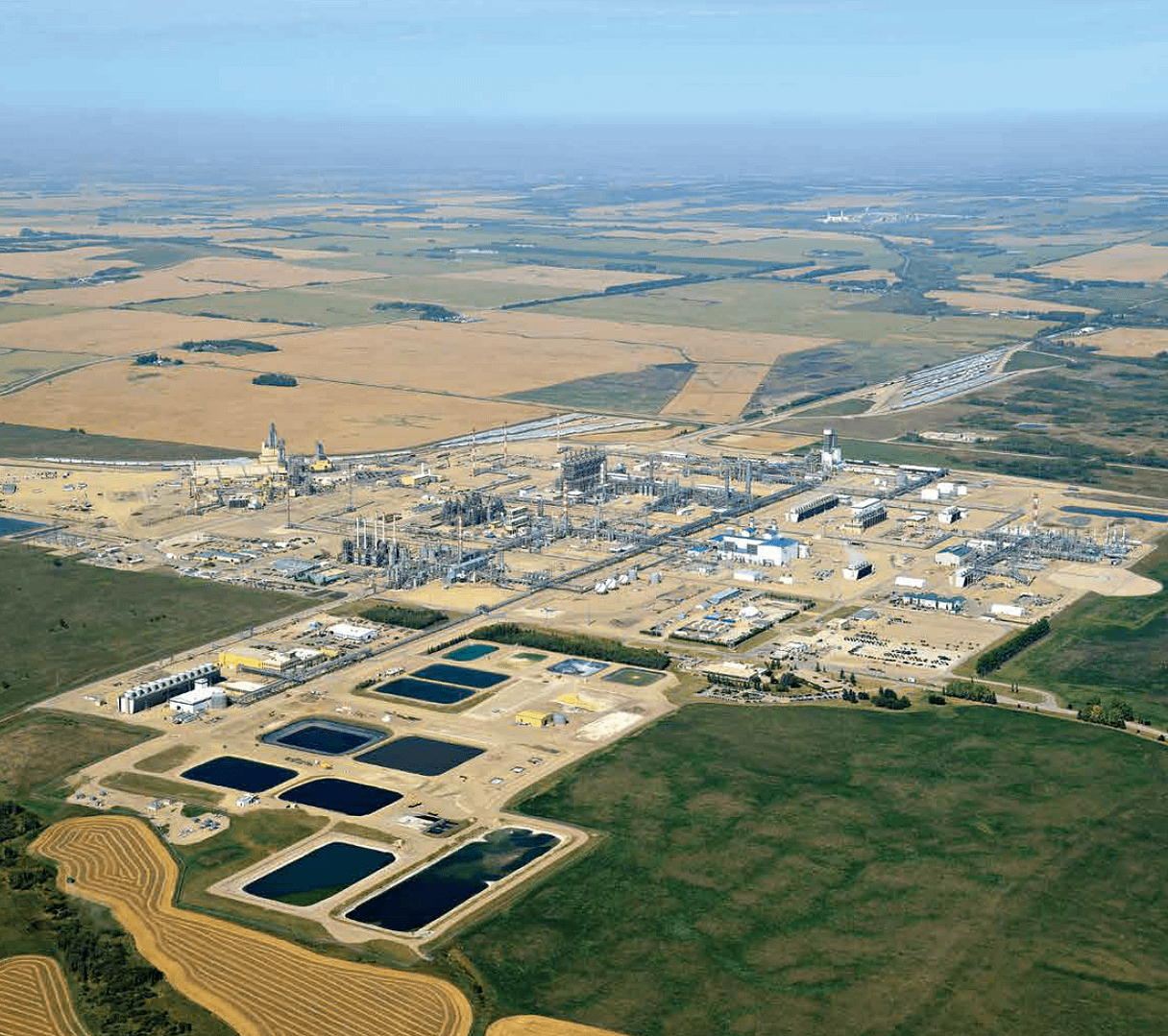
Between my first and second year of studying instrumentation, I got a role as a summer technologist intern with Nova Chemicals at their Joffre facility. This was a special achievement to me because the Joffre plant is located north of a highway which connected Red Deer (to the west) and Delburne (to the east), which meant that while growing up every trip my family took to Red Deer from our farm, I could see this crazy structure off in the distance, and at night the lights of the Joffre plant would make it appear as its own little city. Years of staring out towards the plant made me wonder what was happening there and what it looked like inside, so when the opportunity came to go work there I got to fulfill a deep wonder!
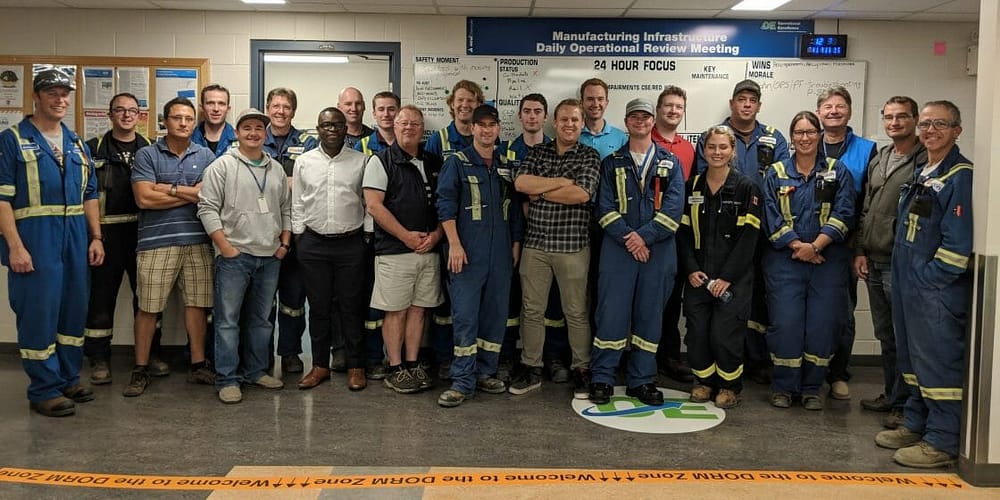
The picture below is of the Manufacturing Infrastructure (MI) team I worked with. Consisting of team leaders, engineers, chemists, technologists, and a few different trades we were a very multidiscipline group.
And I cannot tell you how challenging it was to arrange and organize this picture!
People have a resistance to being corralled into a photo, even more when at work! But I was determined to create a memory of this work experience, and afterwards it ended up being quite the hit! Turns out the MI team used to do group photos but had stopped doing them for a few years, so this sparked a revitalization of team bonding events.
Computer Engineering
Following my success at RDC, I made the decision to continue my education and try my luck at getting a bachelor of science degree. So I enrolled at the University of Alberta and was accepted into their chemical engineering with computer process control program. However since I wasn’t given any transfer credits for my previous courses, during my first year I decided to give up my seat in the chemical engineering program instead competing to get into the computer engineering program. See I had built my first computer when I was 10 years old with my dad’s help and had been a technology nerd ever since, so I was interested in learning about the electronics and programming, hoping to combine this with my knowledge of instrumentation. Knowing that instruments were growing in their digital sophistication, adopting IoT connectivity and cloud capabilities, as well as every other system in the modern world learning how these devices worked pushed me to switch into computer engineering. Thankfully I had a pretty good GPA from my first year, first semester because two things were about to surprise me. One, the popularity of this engineering discipline and how limited the size of the accepted class is. And two, a global pandemic.
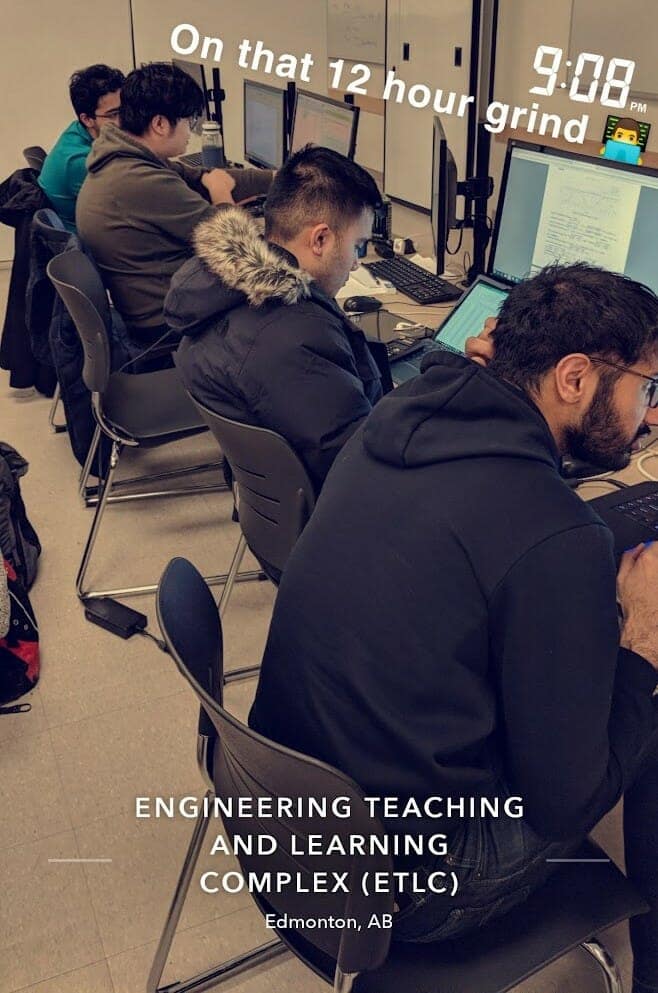
My degree was a turbulent time, switching to online learning during my second year proved a hard time. The university didn’t know how to handle this change in teaching, so assignments/labs/projects were reworked and with no prior experience to go off of, the workload got to be brutal. Coupled with the challenge of meeting new friends online, now that we were in our specific discipline my first year friends went into different disciplines, it made it extremely hard to get a study group and keep up. Then we switched back to in person, and then back to online, and then back to in person.
It was also a personally challenging time, turns out I am not very good at highly theoretical and abstract mathematics, which is a bit of a problem when the university wants to make their engineers mini-mathematicians. Looking at you Calculus for Engineering I, II, & III, Linear Algebra, Differential Equations, Formal Systems and Logic (Discrete Mathematics), Probability Theory, Continuous & Discrete Time Signals and Systems, Physics of Wave Motion, Optics, and Sound, Physics of Engineering Mechanics, Physics of Electricity and Magnetism. I respect and love math, it’s one of the most powerful tools humans have, and when taught to be used as a tool it can unlock a deeper control of the reality around us, but the math we engineers get tested against is not a test of just your skills, but also your fortitude.
On the other hand, I discovered that I had a personal strength in problem solving, programming, and anything practical. Labs, projects, and software were what I excelled at delivering.
Oh this got to be a familiar experience!
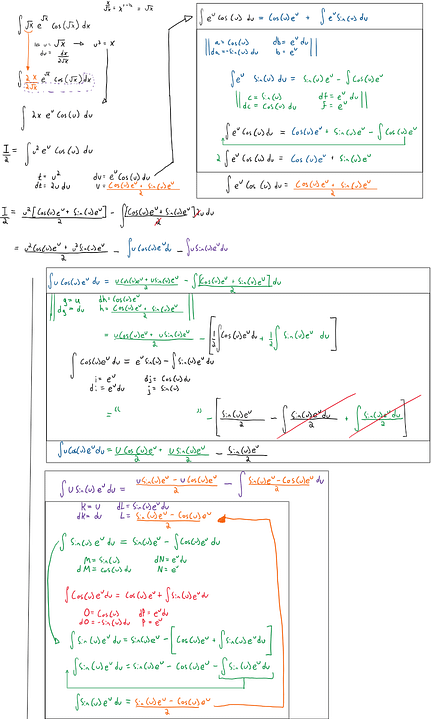
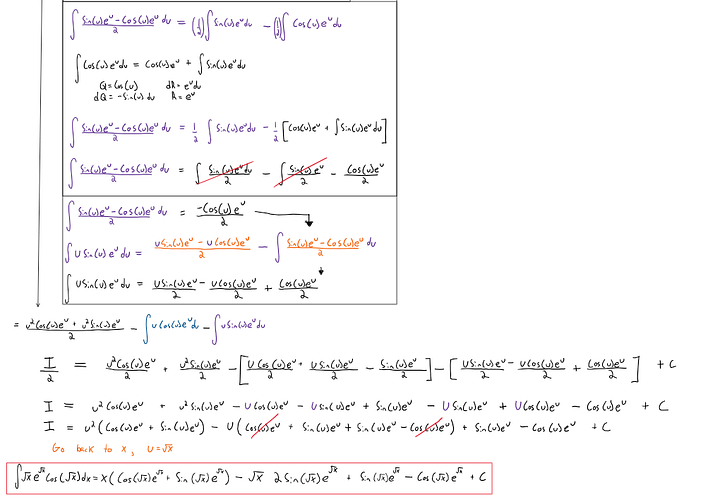
We had a Calculus for Engineering II assignment due, specifically what was called “written assignment”. These bundles of joy had seemingly small questions, but in reality would require hours of work.
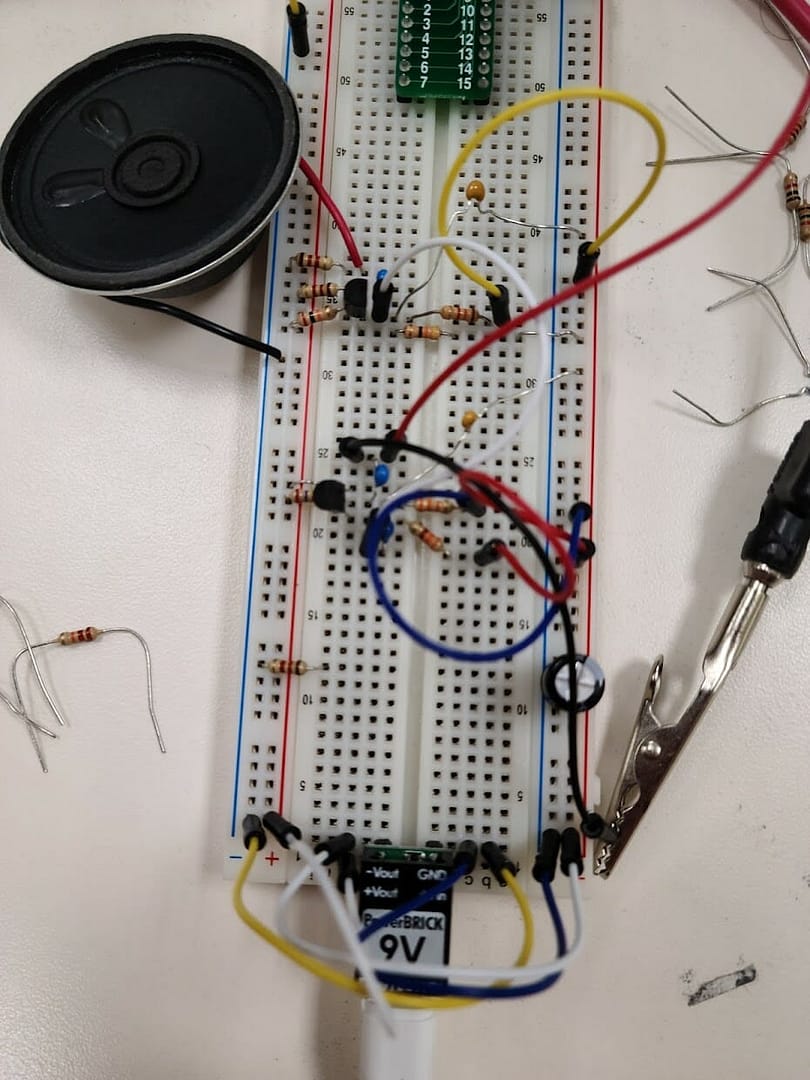
Designed, built, and tested an audio-band amplifier with a mid-band voltage gain of 12 V/V +/- 5% at a design frequency of 2 kHz, possessing an input impedance greater than 10 kW, and a minimum output voltage swing of 10 V (peak-to-peak). The amplifier load consisted of a 1200:8 W impedance transformer driving an 8W speaker.
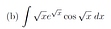
Evaluate the following integral:
Super useful math right?
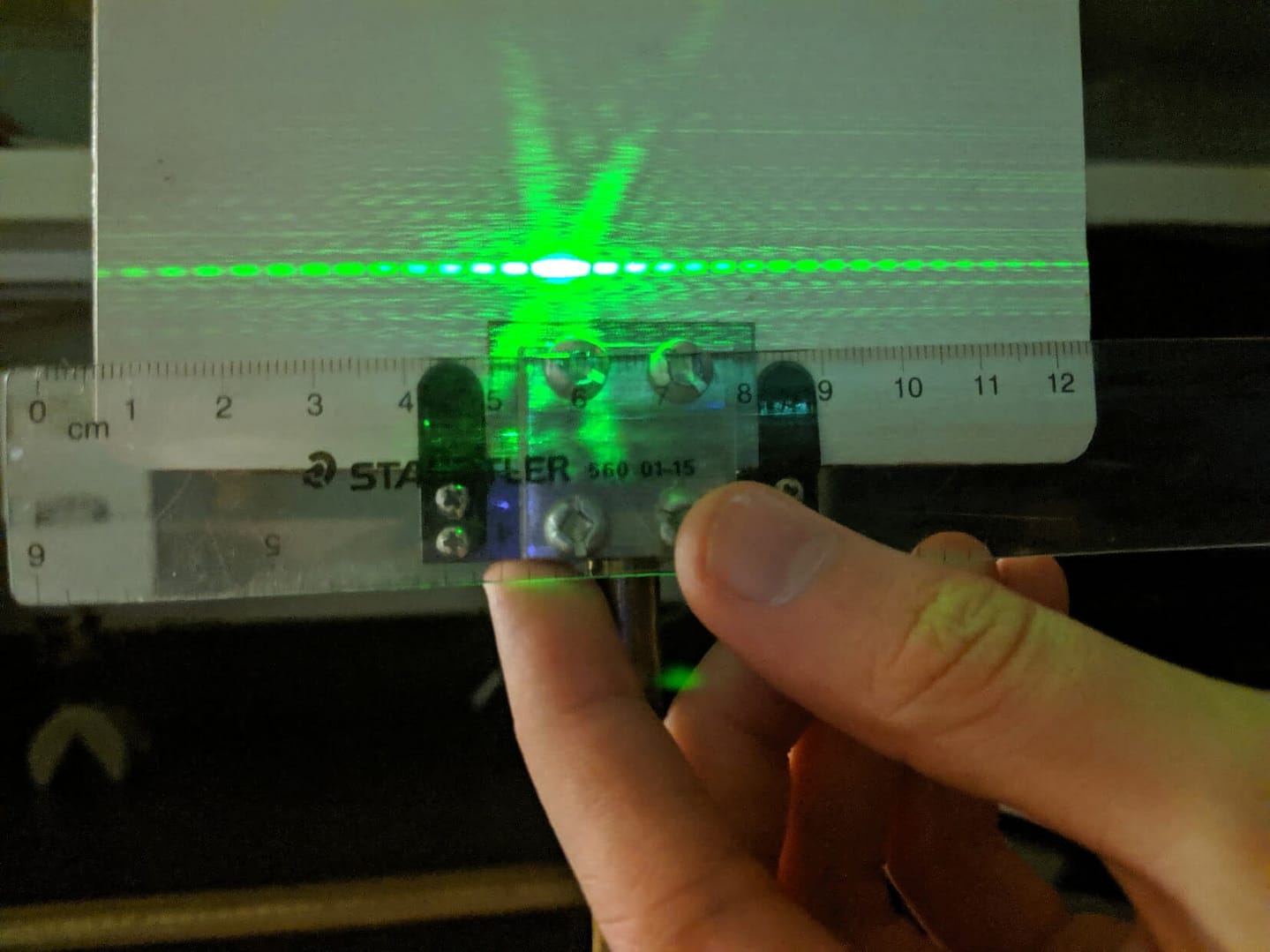
The “Double Slit Experiment”, first performed by Thomas Young in 1801.
An observation of the wave–particle duality concept, and evidence for the fundamentally probabilistic nature of quantum mechanics. Light is shown to display a behavior characteristic of both waves and particles.
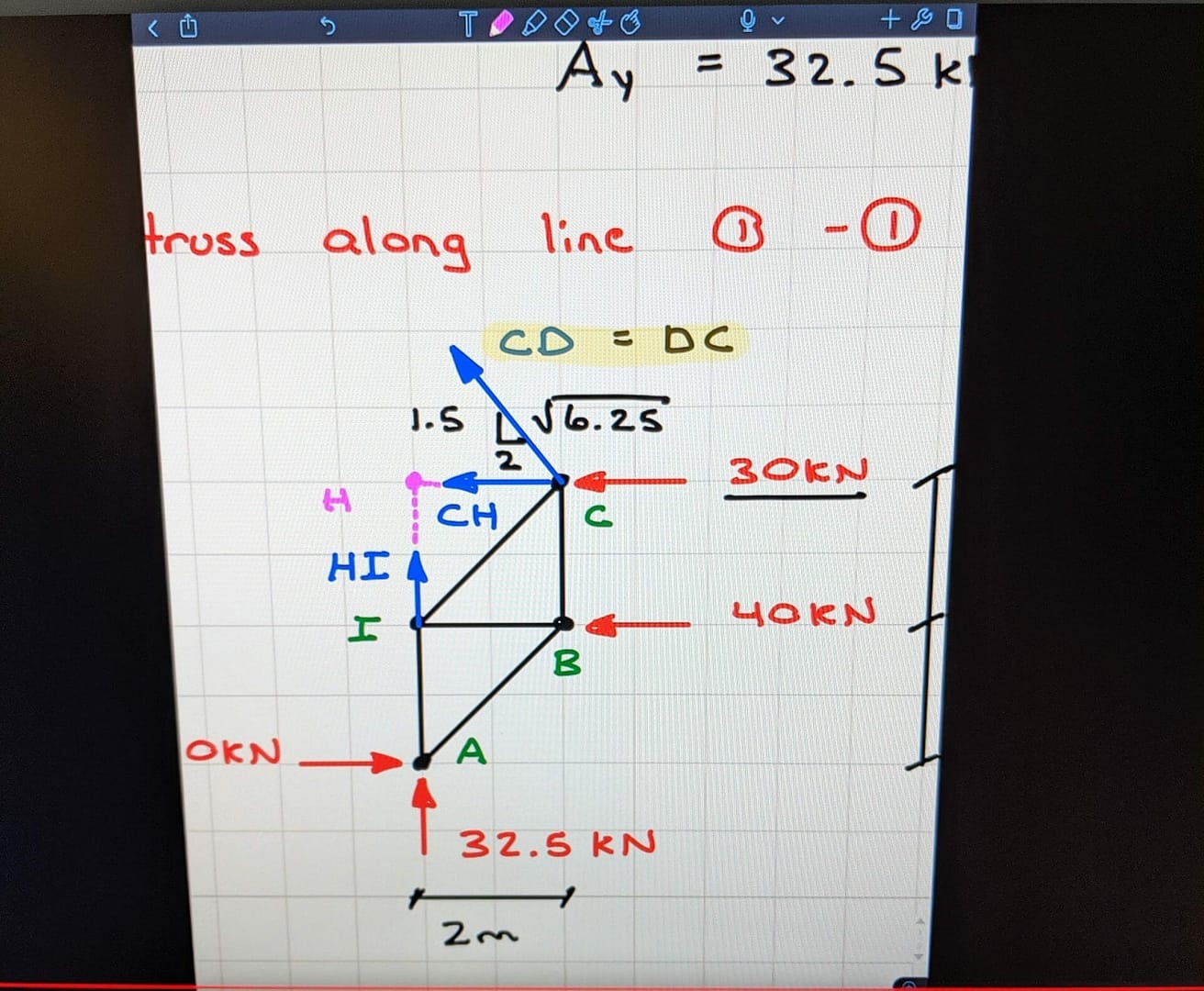
An intro “Statics” calculation, in another life I could have seen myself becoming a civil engineer, very interesting work!
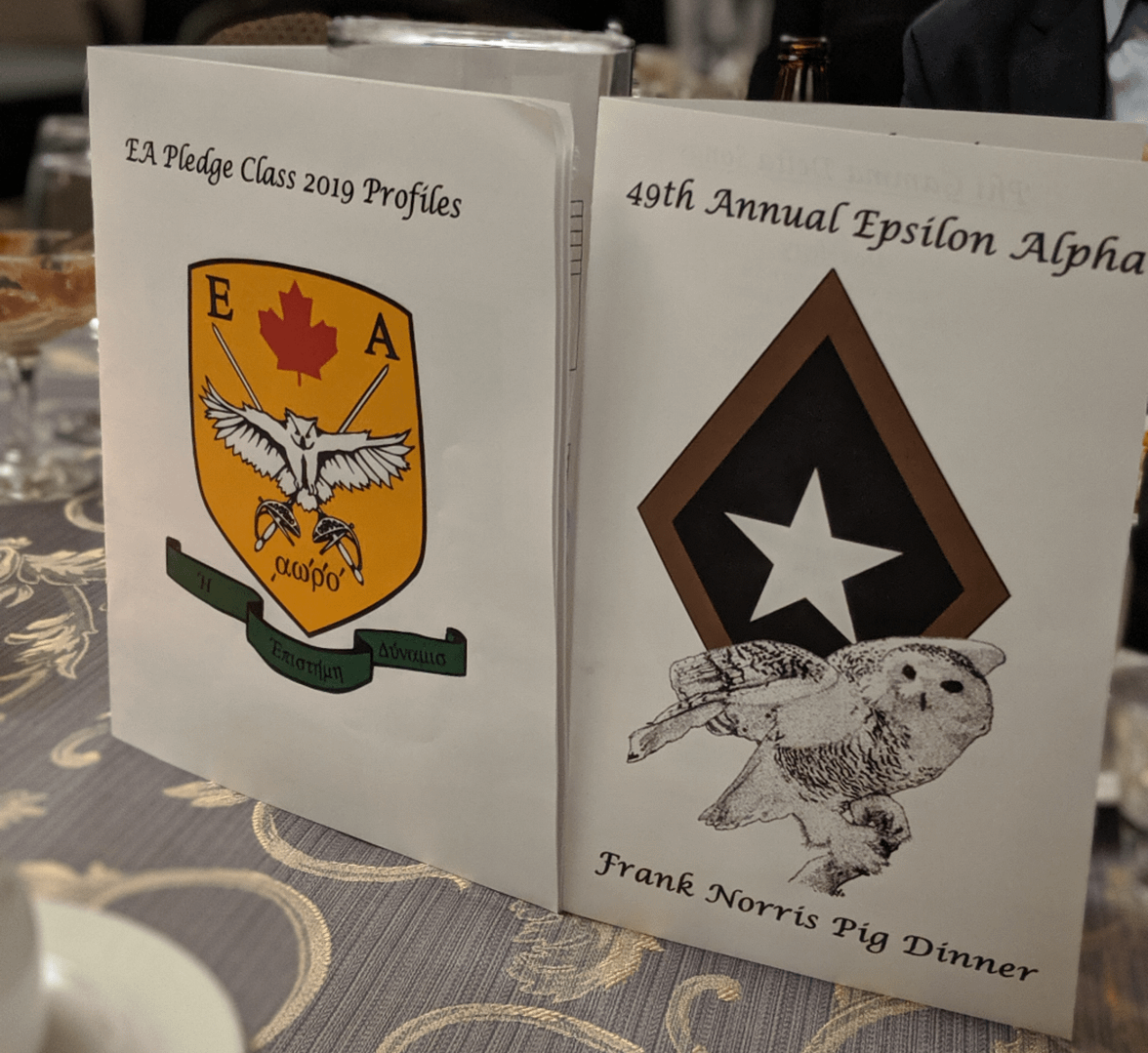
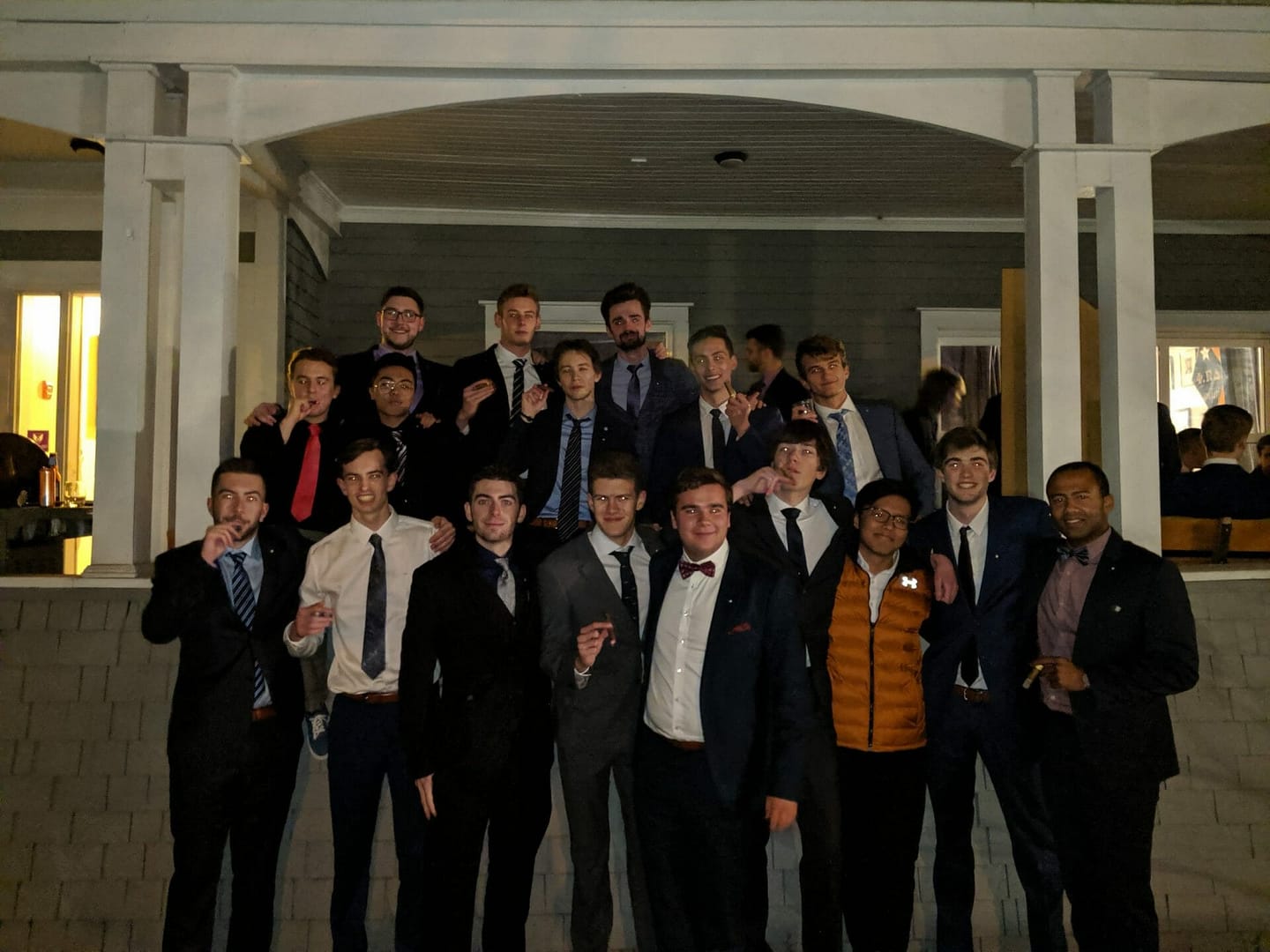
Phi Gamma Delta, 2019 Frank Norris Pig Dinner.
The last dinner celebration we were able to have before Covid upended the world.
My pledge class, Epsilon Alpha chapter.
Great times, with great people.
When I started college, one of the most discussed topics amongst us technologists was the coveted Iron Rings that the engineers got when they graduated. I immediately aspired to one day get that ring.
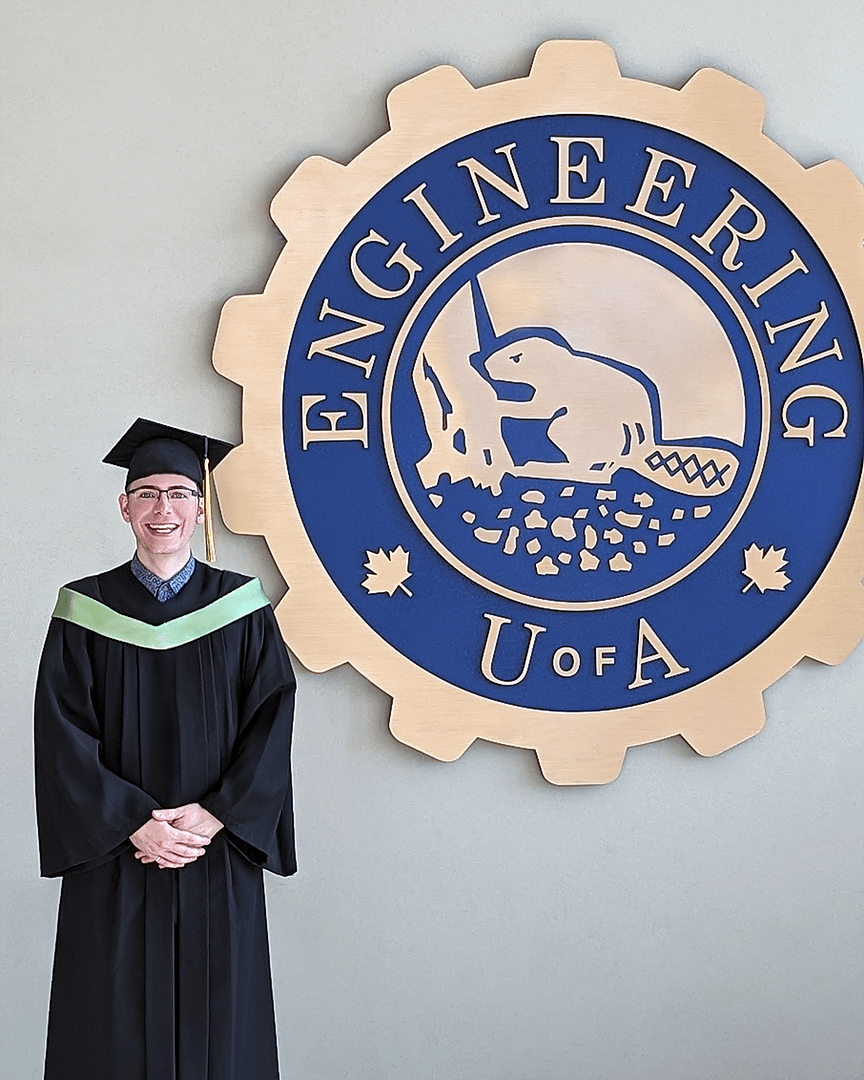
Six years and one pandemic later, I was able to proudly participate in the Iron Ring ceremony.
Continuing the tradition of Canadian Engineers who obligate themselves to live by a high standard of professional conduct and uphold public safety.
And receiving the ring to remind me of that obligation.
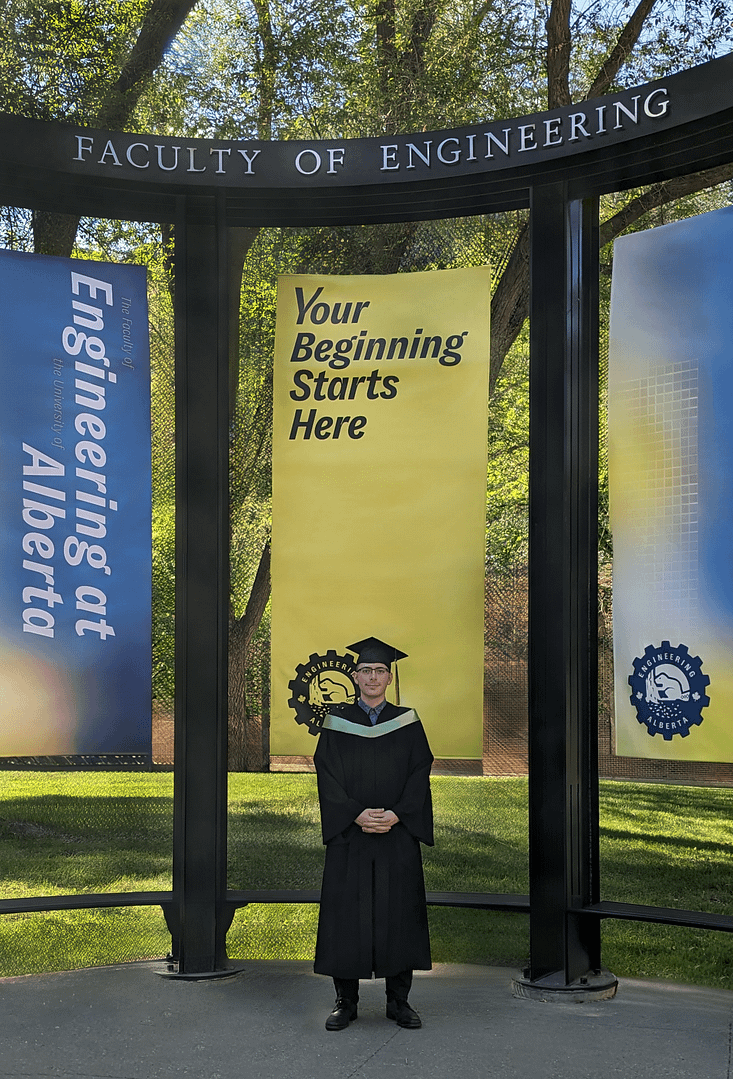
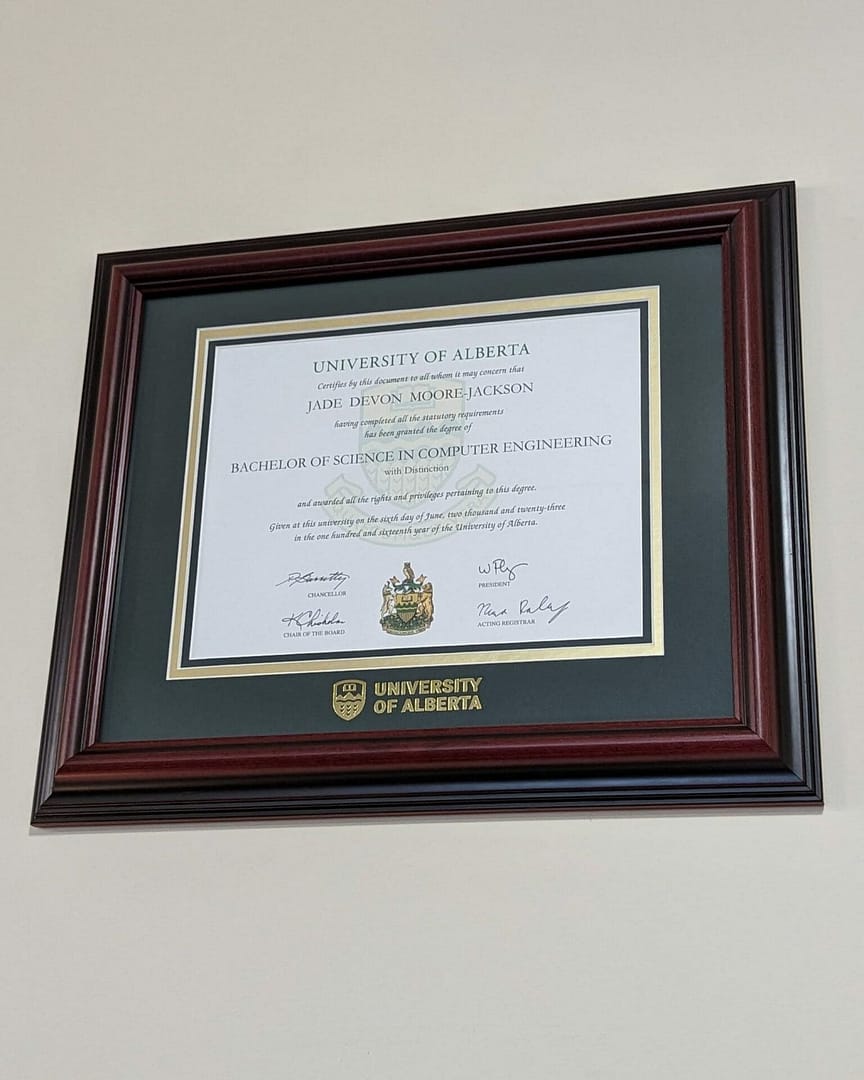
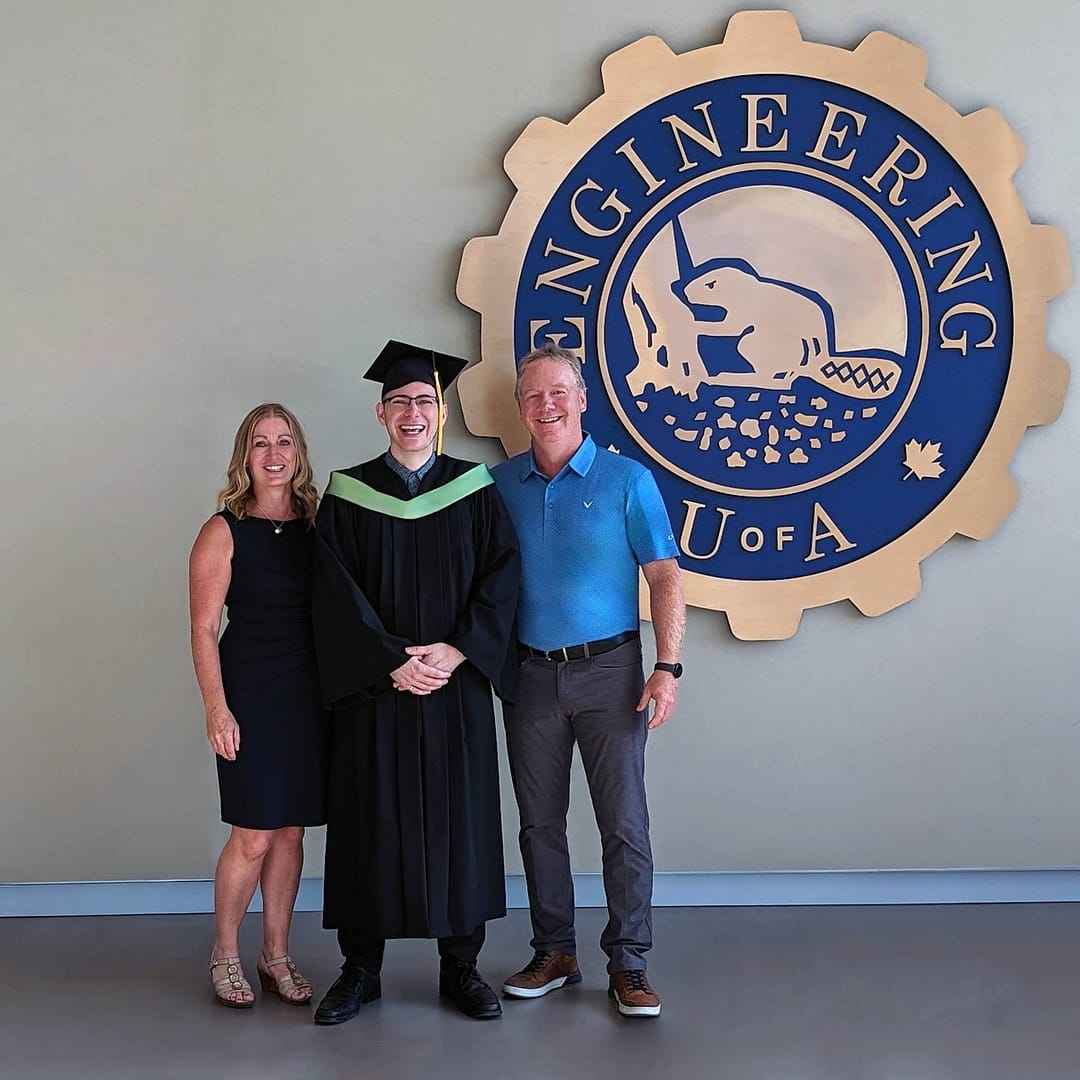
Overall, I found success and graduated with distinction!
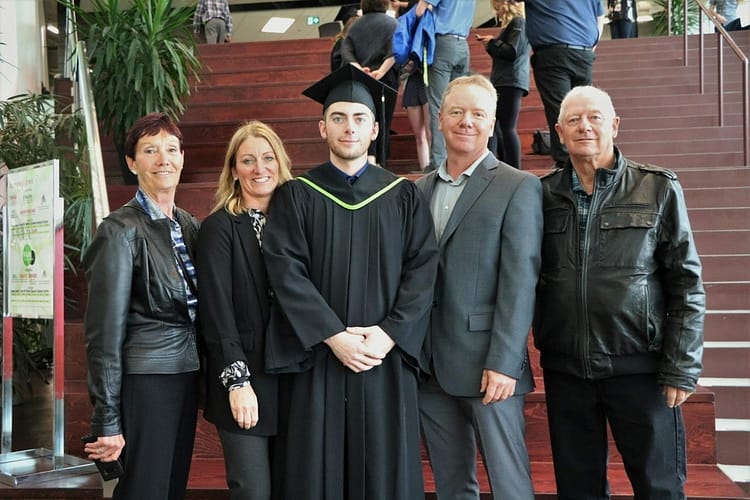
Proudly becoming the first person in my family to obtain a degree.